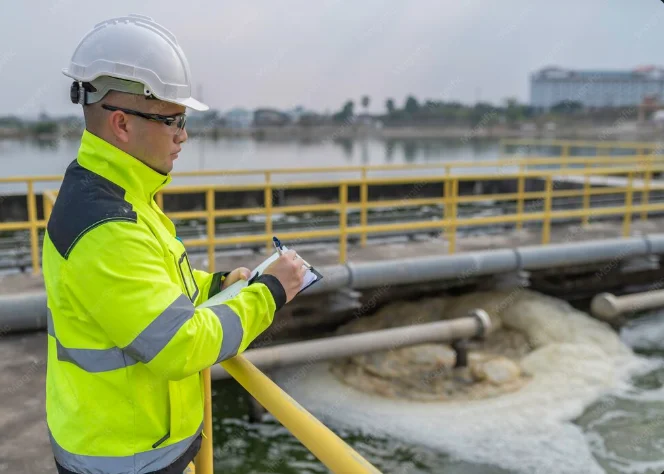
Water and Sanitation Engineering
Overview
Job Growth
N/A
Duration
N/A
Avg. Salary
N/A
Career Paths
N/A
Program Description
Water and Sanitation Engineering teaches how to protect and provide safe water, and design sanitation systems that keep communities healthy. You will study biology, chemistry, physics, mathematics, hydrology, water treatment, sanitation technologies, and basic civil engineering principles. The program mixes classroom theory with hands-on laboratory tests and fieldwork so you learn to test water quality, analyse data, and help design practical solutions. Graduates can become laboratory technicians, environmental scientists, quality control analysts, research scientists, or science teachers, and can work with Ghana Water Company, NGOs, government agencies, and private firms. This course is practical, community-focused, and opens many doors to jobs that improve public health and the environment.
Aims & Objectives
Develop practical water quality testing skills and laboratory safety, demonstrated by accurate sample collection and documented test results.
Master basic calculations for water supply and sanitation system design, shown by producing sketches and dimensioned calculations.
Understand core principles of water chemistry, microbiology, and hydrology, measured by written and laboratory assessments.
Apply data collection and statistical analysis to evaluate water sources and produce clear, referenced technical reports.
Why Choose This Program?
High demand and social impact
Skilled graduates are needed in Ghana to manage drinking water and sanitation, offering stable jobs and the chance to improve public health.
Hands-on learning
Strong practical focus with laboratory experiments and fieldwork so you gain real skills employers value.
Clear industry pathways
Opportunities for internships and employment with Ghana Water Company, local NGOs, municipal assemblies, and private consultancies.
Transferable technical skills
Skills in testing, data analysis, and system design are useful across environmental, public health, and engineering careers.
Skills & Tools
Skills You'll Develop
Use of pH meters, turbidity tests, microbial assays, and proper sample handling to assess safety of drinking water.
Design sampling plans, record field data, and use Excel or statistical tools to analyse trends and report findings.
Perform flow, demand, and pipe sizing calculations and use tools like EPANET for basic network modelling.
Calibrate and maintain field meters and laboratory equipment to ensure accurate and reliable measurements.
Tools & Resources
EPANET
QGIS
Microsoft Excel
R or other statistical software
Challenges & Tips
Challenges
Strong maths and chemistry requirements
Tips & Advice
Attend extra lessons, practise problem sets regularly, and use online tutorials to build confidence.
Video Guide
Frequently Asked Questions
Ready to Apply?
Find programs that match your grades and interests - even if you haven't written WASSCE yet
Loading.. Please wait.

Talk to a Professional
Join a mentorship session with real professionals working in your field of interest.
 Real industry professionals
 Small groups (10-15 students)
 Starting at GH₵ 15 per session