Science Laboratory Technology
Overview
Job Growth
N/A
Duration
N/A
Avg. Salary
N/A
Career Paths
N/A
Program Description
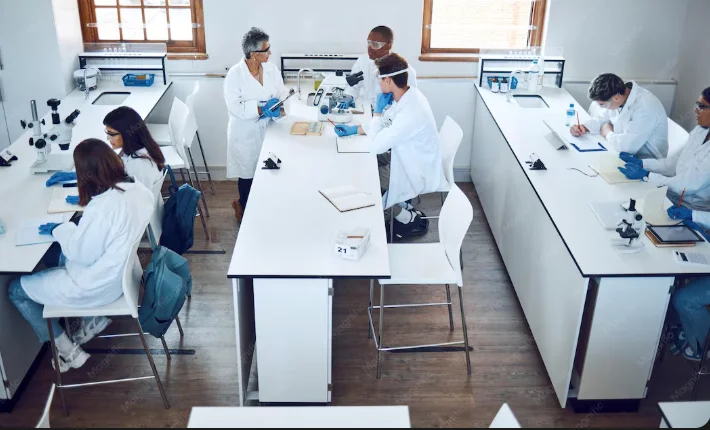
Science Laboratory Technology trains students to perform medical laboratory tests that support diagnosis, treatment, and disease prevention. You will study anatomy, physiology, microbiology, hematology, clinical chemistry, pathology, and laboratory safety. The program combines classroom theory with hands-on lab practice in microscopy, sample processing, and basic data recording. Graduates can pursue roles such as Medical Laboratory Technician, work in diagnostic laboratories, hospitals, public health services, or continue training toward allied health careers like Registered Nurse, Physiotherapist, or Public Health Officer. This program opens practical, in-demand health career paths and builds real skills that directly impact patient care and community health.
Aims & Objectives
Develop practical competence in microscopy, sample collection, and routine laboratory tests, demonstrated by completing supervised practical assessments.
Master infection control procedures and safe specimen handling, shown by adherence to biosafety checklists during clinical placements.
Understand principles of anatomy, physiology, microbiology, and clinical chemistry, assessed through written examinations and case studies.
Use laboratory information systems and basic data recording methods to produce accurate test reports, validated by supervised reporting tasks.
Why Choose This Program?
High demand in healthcare
Medical laboratory skills are needed in hospitals, clinics, public health programs, and private labs across Ghana, increasing job opportunities.
Hands-on practical training
Strong focus on laboratory practice and clinical placements gives real experience that employers value.
Clear career pathways
Leads to roles as Medical Laboratory Technician, opportunities for further study, and transfer into allied health professions.
Contribution to public health
Work directly supports disease diagnosis, outbreak response, and community health, offering meaningful, visible impact.
Skills & Tools
Skills You'll Develop
Prepare and examine blood, urine, and other specimens using compound microscopes to identify cells, parasites, and pathogens.
Operate centrifuges, spectrophotometers, and automated analyzers to perform biochemical assays and blood counts.
Apply standard precautions, sterilization, and waste disposal procedures to protect patients and staff.
Record, interpret, and report test results using Laboratory Information Management Systems and spreadsheets for accurate patient records.
Tools & Resources
Laboratory Information Management System (LIMS)
Microsoft Excel
Basic statistical software (SPSS or R)
Challenges & Tips
Challenges
Heavy science content and practical workload
Mastering precision and laboratory procedures
Tips & Advice
Set a study schedule, focus on one topic at a time, and practice lab techniques regularly during sessions.
Repeat practicals, ask instructors for demonstrations, and use checklists to build accuracy.
Video Guide
Frequently Asked Questions
Ready to Apply?
Find programs that match your grades and interests - even if you haven't written WASSCE yet
Loading.. Please wait.

Talk to a Professional
Join a mentorship session with real professionals working in your field of interest.
 Real industry professionals
 Small groups (10-15 students)
 Starting at GH₵ 15 per session