Renewable Energy
Overview
Job Growth
N/A
Duration
N/A
Avg. Salary
N/A
Career Paths
N/A
Program Description
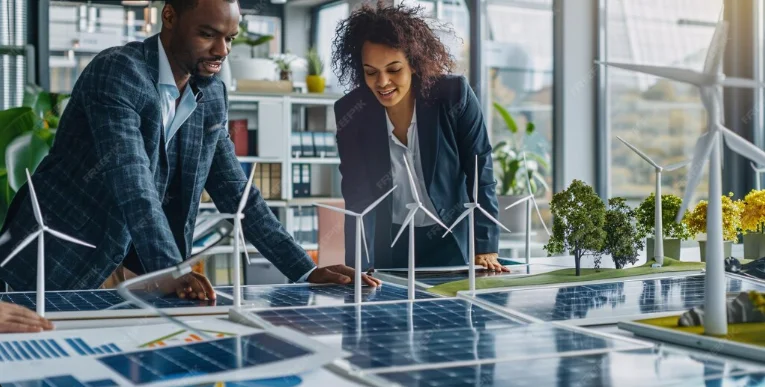
Renewable Energy studies how we produce useful power from natural sources like the sun, wind, and biomass. In this program you will learn core science and math, basic electrical principles, environmental science, and laboratory methods used to test and monitor renewable systems. Practical work includes assembling small solar and wind demonstration systems, collecting performance data, and analyzing results. Graduates can pursue careers as research scientists, laboratory technicians, environmental scientists, quality control analysts, or science teachers, and can find roles in energy companies, research institutes, utilities, and NGOs. This program suits students who enjoy hands-on experiments, problem solving, and working to make Ghana and the world greener.
Aims & Objectives
Develop the ability to design, assemble, and test a small-scale solar or wind demonstration system and record performance data accurately.
Master safe laboratory techniques and proper use of measurement instruments, including multimeters and data loggers, in at least five supervised experiments.
Understand and apply basic physics and electrical mathematics to calculate energy, power, efficiency, and system losses with 80 percent accuracy on assessments.
Apply research methodology to plan and execute a simple investigative project, analyze results statistically, and produce a written lab report following scientific conventions.
Why Choose This Program?
Growing job market
Renewable energy is expanding in Ghana and across Africa, creating demand for technicians, analysts, and researchers in solar, wind, and biomass projects.
Hands-on learning
The program emphasizes laboratory experiments and field testing, so you gain practical skills employers value, not only theory.
Relevant to national priorities
Ghana is investing in cleaner power and off-grid solutions, so graduates can contribute directly to important national projects and community electrification.
Pathway to further study and internships
Strong foundation for university science and engineering courses, and opportunities for internships with utilities, research centres, and NGOs.
Skills & Tools
Skills You'll Develop
Safe handling of electrical components, use of protective equipment, wiring of demonstration systems, and adherence to lab procedures.
Use of data loggers and sensors to record irradiance, voltage, current, wind speed, then analyse data using Excel or basic statistical tools.
Calibration of multimeters, sensors, and meters, routine checks and simple maintenance to ensure reliable experiment results.
Basic use of energy simulation tools or spreadsheets to size small PV arrays, estimate output, and compare system options.
Tools & Resources
RETScreen or HOMER (introductory use)
Microsoft Excel or LibreOffice Calc
MATLAB or GNU Octave for basic analysis
PVsyst or PVsyst-lite for solar estimates
Challenges & Tips
Challenges
Difficulty with the required math and physics concepts.
Understanding laboratory procedures and data analysis.
Tips & Advice
Use Khan Academy and school remedial sessions, practice problem sets, and study with classmates to build confidence.
Follow step-by-step guides, ask instructors for demonstrations, and repeat experiments to reinforce skills.
Video Guide
Frequently Asked Questions
Ready to Apply?
Find programs that match your grades and interests - even if you haven't written WASSCE yet
Loading.. Please wait.

Talk to a Professional
Join a mentorship session with real professionals working in your field of interest.
 Real industry professionals
 Small groups (10-15 students)
 Starting at GH₵ 15 per session