Public Health in Disease Control
Overview
Job Growth
N/A
Duration
N/A
Avg. Salary
N/A
Career Paths
N/A
Program Description
Public Health in Disease Control teaches you how to prevent, detect, and respond to illnesses that affect communities. You will study epidemiology, disease surveillance, infection prevention, health promotion, basic biostatistics, environmental health, and community outreach. Practical work includes outbreak investigation, health education campaigns, and data collection. Graduates can pursue careers as Public Health Officers, Medical Laboratory Technicians, Registered Nurses with public health focus, Healthcare Administrators, or work with NGOs and government health teams. This program prepares you to protect community health, work in clinics, labs, or field response teams, and supports further study in health professions. If you want to help stop disease and improve health for many people, this program is a strong, rewarding choice.
Aims & Objectives
Develop practical skills to conduct disease surveillance and carry out basic outbreak investigations, measurable by field reports and line lists.
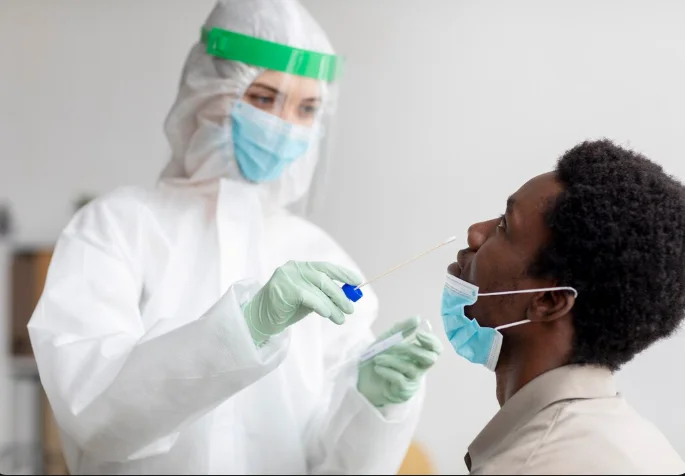
Master infection prevention and control procedures in clinical and community settings, measured by competency checks on PPE use and hygiene protocols.
Understand and apply basic epidemiology and biostatistics to interpret health data, measured by analysis assignments using real or simulated data.
Create and evaluate health promotion materials and community education sessions, measured by documented outreach activities and feedback.
Why Choose This Program?
Strong job demand
Public health skills are needed by hospitals, Ghana Health Service, NGOs, and international agencies, offering steady job opportunities.
Hands-on field experience
Training includes community outreach, laboratory practice, and outbreak response exercises that build real-world competence.
Clear career pathways
Completing the program opens routes to roles such as Public Health Officer, lab technician, or pathways to nursing and health administration.
Transferable skills and further study
You gain data analysis, communication, and infection control skills useful across healthcare jobs and for higher education.
Skills & Tools
Skills You'll Develop
Designing case definitions, keeping line lists, conducting contact tracing, and reporting to health authorities.
Proper use of PPE, sterilization basics, isolation procedures, and protocols to reduce transmission in clinics and communities.
Collecting, cleaning, and analysing health data using tools like DHIS2, Epi Info, and Microsoft Excel to inform decisions.
Creating clear public messages, educational materials, and organizing community engagement to change health behaviours.
Tools & Resources
DHIS2
Epi Info
Microsoft Excel
Open Data Kit (ODK) or KoboToolbox
Challenges & Tips
Challenges
Heavy science and statistics content
Balancing theory and fieldwork
Tips & Advice
Build foundations in biology and basic math early, use study groups, and practise with real datasets.
Plan time for practical placements, communicate with supervisors, and treat field reports as learning opportunities.
Video Guide
Frequently Asked Questions
Ready to Apply?
Find programs that match your grades and interests - even if you haven't written WASSCE yet
Loading.. Please wait.

Talk to a Professional
Join a mentorship session with real professionals working in your field of interest.
 Real industry professionals
 Small groups (10-15 students)
 Starting at GH₵ 15 per session