Public Health (Health Promotion)
Overview
Job Growth
N/A
Duration
N/A
Avg. Salary
N/A
Career Paths
N/A
Program Description
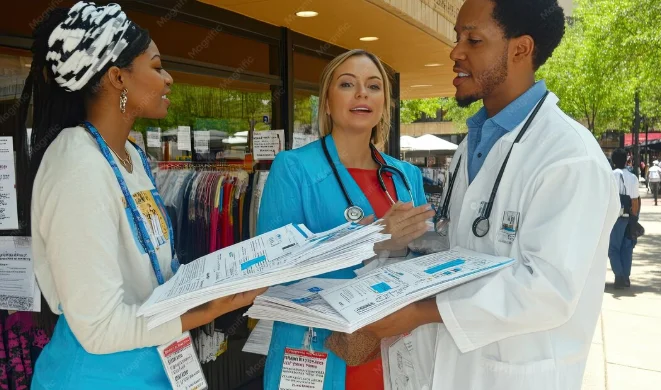
Public Health in Health Promotion trains students to protect and improve community health. You will learn how to prevent disease, promote healthy behaviours, and support health services through subjects like community health, anatomy and physiology, disease prevention, health education, epidemiology, and basic clinical skills. The program combines classroom theory with hands-on practice in screening, health talks, and data collection. Graduates can work as public health officers, community health nurses, health promotion officers, medical laboratory assistants, or continue to nursing and allied health professions. This pathway prepares you for meaningful work in clinics, schools, non-governmental organisations, and government health programs, helping you make a real difference in Ghanaian communities.
Aims & Objectives
Develop practical patient assessment and basic screening skills, demonstrated by conducting blood pressure, BMI, and glucose checks under supervision.
Master infection control procedures and safe specimen handling, measured by correct use of personal protective equipment and waste disposal in clinical practice.
Understand principles of health promotion and community education, shown by designing and delivering a clear 10-minute health talk to a community group.
Use health data management tools to collect, enter, and present basic public health data using spreadsheets or DHIS2, with accurate reporting of simple indicators.
Why Choose This Program?
High demand for community health workers
Ghana needs trained personnel for clinics, CHPS compounds, schools, and NGOs, giving graduates steady entry-level job opportunities.
Practical, hands-on learning
The program includes community placements and health campaigns, so you build real skills that employers value.
Clear pathway to further study
You can progress into nursing, public health degrees, or specialised technician roles with additional training.
Contribution to community wellbeing
Work focuses on prevention and education, allowing you to make visible improvements in local health outcomes.
Skills & Tools
Skills You'll Develop
Perform vital sign checks, BMI measurement, basic vision and glucose screening, and record findings accurately for follow-up.
Collect, enter, and analyse routine health data using Microsoft Excel and DHIS2, produce simple charts and basic reports.
Apply hand hygiene, use of PPE, safe injection and waste disposal practices to reduce infection risks in clinics and community settings.
Plan and deliver clear health talks, use behaviour change communication techniques, and prepare educational materials for diverse audiences.
Tools & Resources
Microsoft Excel
DHIS2
Epi Info or basic statistics software
Challenges & Tips
Challenges
Heavy science content, especially biology and anatomy
Learning data management and basic statistics
Tips & Advice
Form study groups, attend extra tutorials, and use visual aids to memorise structures and processes.
Practice with real datasets, follow step-by-step Excel or DHIS2 tutorials, and ask tutors for supervised exercises.
Video Guide
Frequently Asked Questions
Ready to Apply?
Find programs that match your grades and interests - even if you haven't written WASSCE yet
Loading.. Please wait.

Talk to a Professional
Join a mentorship session with real professionals working in your field of interest.
 Real industry professionals
 Small groups (10-15 students)
 Starting at GH₵ 15 per session