Pharmaceutical Sciences
Overview
Job Growth
N/A
Duration
N/A
Avg. Salary
N/A
Career Paths
N/A
Program Description
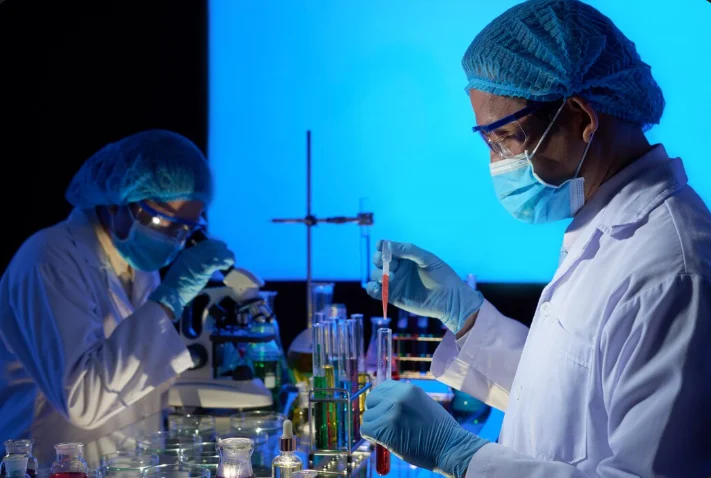
Pharmaceutical Sciences studies how medicines are discovered, made, tested, and safely used. You will learn core science subjects like chemistry, biology, and mathematics, plus specialised topics such as pharmacology, pharmaceutics, biochemistry, and quality control. Practical lab sessions teach formulation, compounding, and drug analysis. Graduates can work as pharmacists after further study, or as pharmaceutical technologists, quality control analysts, regulatory affairs officers, production supervisors, or research assistants in hospitals, community pharmacies, industry, and regulatory bodies. This program builds strong science foundations and practical skills, preparing motivated SHS students for higher study and rewarding careers that improve health and patient care.
Aims & Objectives
Develop accurate dosage calculation and compounding skills, demonstrated by passing practical assessments with competence.
Master fundamental laboratory techniques for drug analysis, measured by successful completion of laboratory practicals and reports.
Understand pharmacology and therapeutic principles to explain how common medicines work, assessed through written tests and case studies.
Apply quality assurance and basic regulatory standards in simulated production tasks, evaluated by checklist-based competency tests.
Why Choose This Program?
Strong career pathways
Leads to professional roles in community and hospital pharmacies, pharmaceutical industry, regulatory agencies, and research, giving varied job options in Ghana and beyond.
Hands-on practical training
Emphasises laboratory skills, compounding, and drug analysis so students gain practical experience that employers value.
Growing healthcare demand
Healthcare expansion in Ghana increases need for trained pharmaceutical personnel in production, quality control, and clinical settings.
Industry and internship links
Opportunities for placements with hospitals, community pharmacies, pharmaceutical manufacturers, and the Pharmacy Council to gain real-world experience.
Skills & Tools
Skills You'll Develop
Prepare and test basic dosage forms, use balances and mixers, and follow standard operating procedures for safe medicine preparation.
Use laboratory methods such as titration, UV-Vis spectrophotometry, and learn principles of HPLC for drug analysis and quality testing.
Apply Good Manufacturing Practice concepts, perform quality control tests, and follow documentation and standard operating procedures.
Calculate correct doses, understand absorption and elimination principles to support safe and effective medicine use.
Tools & Resources
Laboratory Information Management System (LIMS)
HPLC control software
Microsoft Excel
Challenges & Tips
Challenges
Heavy science and math content can be challenging.
Mastering laboratory techniques takes practice.
Tips & Advice
Strengthen basics in chemistry, biology, and maths early, use textbooks and online tutorials, and ask teachers for extra help.
Attend all practicals, practice safe lab habits, keep a detailed lab notebook, and form study groups for peer practice.
Video Guide
Frequently Asked Questions
Ready to Apply?
Find programs that match your grades and interests - even if you haven't written WASSCE yet
Loading.. Please wait.

Talk to a Professional
Join a mentorship session with real professionals working in your field of interest.
 Real industry professionals
 Small groups (10-15 students)
 Starting at GH₵ 15 per session