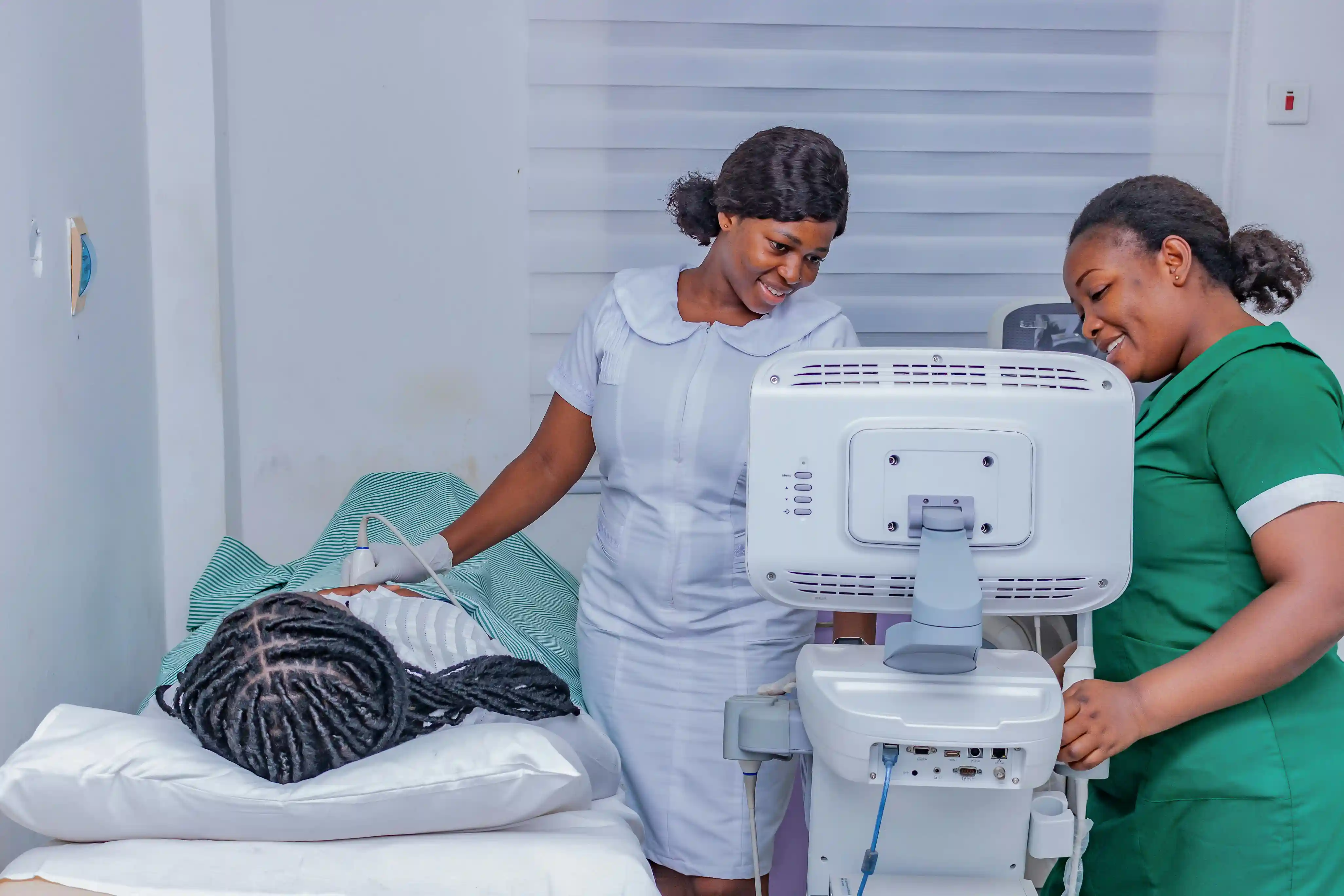
Nursing
Overview
Job Growth
N/A
Duration
N/A
Avg. Salary
N/A
Career Paths
N/A
Program Description
Nursing trains students to care for patients, support medical teams, and promote health in communities. You will study anatomy, physiology, pharmacology, medical-surgical nursing, maternal and child health, community health, and basic laboratory procedures. The program develops clinical skills, patient assessment, infection control, and medical documentation. Graduates can work as Registered Nurses, Medical Laboratory Technicians, Physiotherapy assistants, Public Health Officers, or move into healthcare administration. This program is hands-on and community-focused, preparing you for internships in hospitals and clinics, and for further study at nursing schools and universities. If you enjoy helping others and learning practical medical skills, nursing offers a trusted, rewarding career with strong demand across Ghana.
Aims & Objectives
Develop safe basic nursing procedures, measured by successful clinical assessments and skills tests.
Master patient assessment techniques, shown by accurate vital signs recording and history taking.
Understand anatomy, physiology, and disease prevention, demonstrated by passing theoretical exams.
Create clear medical documentation, evidenced by correct completion of patient charts and reports.
Apply infection control and safety protocols, validated through simulated and real clinical practice.
Why Choose This Program?
Strong Job Demand
Health services across Ghana need trained nurses, offering steady employment in hospitals, clinics, and community health.
Hands-On Learning
Includes clinical placements and simulation labs, so you gain practical experience before graduating.
Clear Career Pathways
Leads to roles such as Registered Nurse, Medical Laboratory Technician, Public Health Officer, and healthcare management.
Community Impact
You will work directly to improve health outcomes in families and communities, a rewarding public service role.
Further Study and Mobility
Provides a foundation for advanced degrees, specializations, and opportunities to work in public and private sectors.
Skills & Tools
Skills You'll Develop
Perform vital signs, patient history taking, basic physical exams, and triage using standardized assessment tools.
Use and maintain equipment such as stethoscopes, sphygmomanometers, pulse oximeters, glucometers, and basic monitors.
Record and manage patient information using paper charts and basic electronic health records, and analyse data with Excel or similar tools.
Apply hand hygiene, sterilization, personal protective equipment, and waste disposal protocols to reduce infection risk.
Write clear nursing notes, medication records, care plans, and referral letters following professional and legal standards.
Tools & Resources
OpenEMR or similar electronic health record systems
Microsoft Excel or Google Sheets
MedCalc or basic clinical calculator apps
Moodle or institution learning management systems
Challenges & Tips
Challenges
Heavy science content and memorization
Balancing theory and practical skills
Tips & Advice
Use active study methods, group study, and regular revision schedules to master anatomy and physiology.
Practice in skills labs, volunteer for extra clinical hours, and ask instructors for feedback.
Video Guide
Frequently Asked Questions
Ready to Apply?
Find programs that match your grades and interests - even if you haven't written WASSCE yet
Loading.. Please wait.

Talk to a Professional
Join a mentorship session with real professionals working in your field of interest.
 Real industry professionals
 Small groups (10-15 students)
 Starting at GH₵ 15 per session