Microbiology
Overview
Job Growth
N/A
Duration
N/A
Avg. Salary
N/A
Career Paths
N/A
Program Description
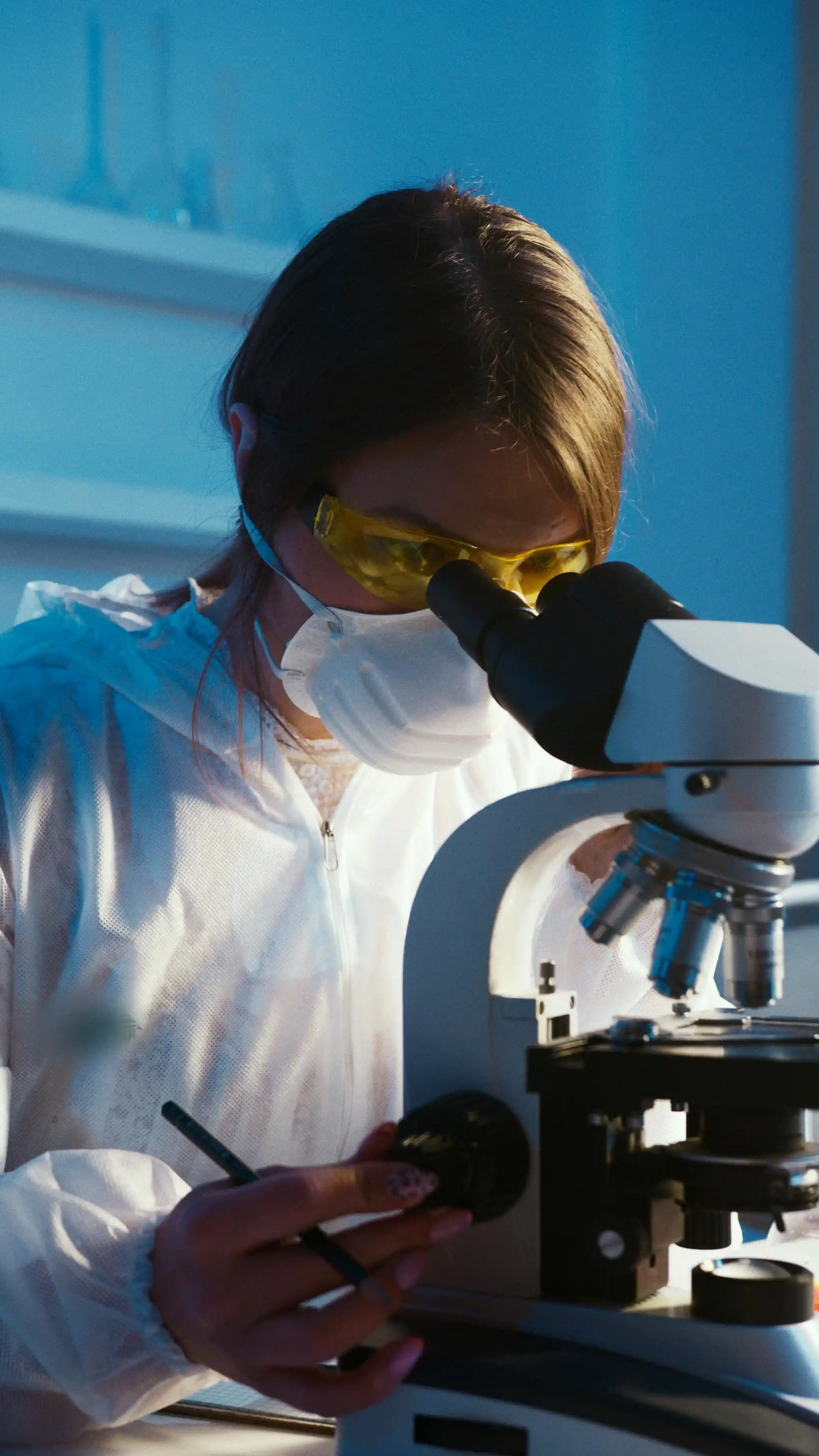
Microbiology is the study of tiny living things, such as bacteria, viruses, fungi, and microscopic algae. In this program you will learn how these organisms live, interact with people and the environment, and affect health, food and industry. You will study subjects like microbiology, biochemistry, molecular biology, laboratory safety, and statistics. Practical lab work and field studies teach you how to culture organisms, use microscopes, run experiments, and analyse data. Graduates can become research scientists, laboratory technicians, environmental scientists, quality control analysts, or science teachers. This program opens doors to work in hospitals, food companies, water management, research institutions, and public health, giving you hands-on skills that are in demand in Ghana and beyond. Stay curious and committed, and you can turn small organisms into big opportunities.
Aims & Objectives
Develop practical laboratory skills in aseptic technique, culturing, microscopy, and instrument use.
Master data collection, statistical analysis, and interpretation of experimental results.
Understand microbial physiology, genetics, and roles in health, industry, and the environment.
Create clear scientific reports, lab records, and safety documentation that meet professional standards.
Apply research methodology to design experiments, test hypotheses, and present findings.
Why Choose This Program?
Hands-on learning
Extensive laboratory work builds practical skills you can use immediately in labs, clinics, and industry.
Strong job prospects
Demand exists for trained microbiology graduates in healthcare, food safety, water treatment, and research sectors in Ghana.
Wide career pathways
Prepare for roles as technicians, researchers, quality analysts, environmental officers, or teachers.
Industry connections
Opportunities for internships and collaborations with hospitals, universities, and regulatory agencies improve employability.
Real-world impact
Work that improves public health, food security, and environmental monitoring, making a visible difference in communities.
Skills & Tools
Skills You'll Develop
Aseptic technique, sterilization, autoclave use, correct PPE, and safe handling of cultures to prevent contamination and hazards.
Use light and fluorescence microscopes, prepare slides, and document observations for identification and analysis.
Perform DNA/RNA extraction, PCR, gel electrophoresis, and basic molecular assays used in diagnostics and research.
Record experiments, use Excel or R for data analysis, apply basic statistics to draw valid conclusions.
Operate and maintain centrifuges, spectrophotometers, incubators, and pipettes to ensure reliable results.
Tools & Resources
Microsoft Excel
R or Python for statistics
Lab inventory or LIMS software
ImageJ for microscopy analysis
Challenges & Tips
Challenges
Heavy practical workload and complex concepts
Tips & Advice
Form study groups, attend lab tutorials, and practice techniques repeatedly to build competence.
Video Guide
Frequently Asked Questions
Ready to Apply?
Find programs that match your grades and interests - even if you haven't written WASSCE yet
Loading.. Please wait.

Talk to a Professional
Join a mentorship session with real professionals working in your field of interest.
 Real industry professionals
 Small groups (10-15 students)
 Starting at GH₵ 15 per session