Laboratory Technology
Overview
Job Growth
N/A
Duration
N/A
Avg. Salary
N/A
Career Paths
N/A
Program Description
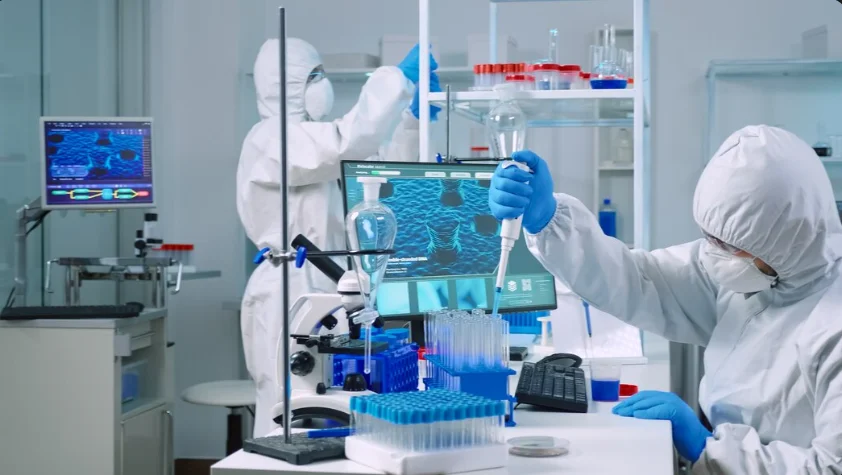
Laboratory Technology trains you to work behind the scenes in healthcare, performing tests that help diagnose disease and guide treatment. You will study anatomy, physiology, microbiology, clinical chemistry, hematology, immunology, and laboratory safety. The program combines classroom theory with hands-on practice in specimen collection, testing, and result recording. Graduates can work as Medical Laboratory Technicians, join hospital diagnostic teams, support public health programs, or progress to roles in healthcare administration and research. If you enjoy practical science, careful work, and contributing directly to patient care, this program opens clear career paths and steady demand in Ghana and beyond.
Aims & Objectives
Develop competence in safe collection, labeling, transport, and storage of clinical specimens according to standard protocols.
Master operation, routine maintenance, and basic troubleshooting of common laboratory equipment such as microscopes and centrifuges.
Understand and apply core laboratory methods in hematology, microbiology, and clinical chemistry, and interpret basic test results.
Create accurate laboratory records, practice proper infection control procedures, and manage patient data using standard documentation tools.
Why Choose This Program?
High demand for skilled technicians
Hospitals, clinics, diagnostic labs, and public health programs in Ghana need trained laboratory staff, creating steady job opportunities.
Hands-on practical training
The program emphasizes supervised laboratory practice and clinical attachments, so you gain real experience before employment.
Clear career and advancement paths
You can start work after a diploma, then pursue a degree, specialization, or supervisory and management roles in healthcare.
Direct impact on patient care and public health
Your tests support accurate diagnosis, disease surveillance, and outbreak response, making your work vital to communities.
Skills & Tools
Skills You'll Develop
Techniques for venipuncture, swabs, urine and stool collection, correct labeling, transport conditions, and cold chain management.
Perform and interpret routine hematology, microbiology cultures, biochemical assays, and rapid diagnostic tests using standard methods.
Operate and perform routine care on microscopes, centrifuges, spectrophotometers, and autoclaves, following manufacturer and safety guidelines.
Implement internal quality control, basic external quality assessment concepts, and strict biosafety and waste disposal procedures.
Tools & Resources
Laboratory Information Management Systems (LIMS)
Microsoft Excel for data recording and calculations
Digital microscopy imaging software
Challenges & Tips
Challenges
Heavy science content and calculation requirements
Learning complex lab protocols quickly
Tips & Advice
Build strong study habits, review math for lab calculations, join study groups, and use practical sessions to reinforce theory.
Practice procedures under supervision, ask instructors for demonstrations, and keep clear step-by-step notes for revision.
Video Guide
Frequently Asked Questions
Ready to Apply?
Find programs that match your grades and interests - even if you haven't written WASSCE yet
Loading.. Please wait.

Talk to a Professional
Join a mentorship session with real professionals working in your field of interest.
 Real industry professionals
 Small groups (10-15 students)
 Starting at GH₵ 15 per session