Industrial Laboratory Technology
Overview
Job Growth
N/A
Duration
N/A
Avg. Salary
N/A
Career Paths
N/A
Program Description
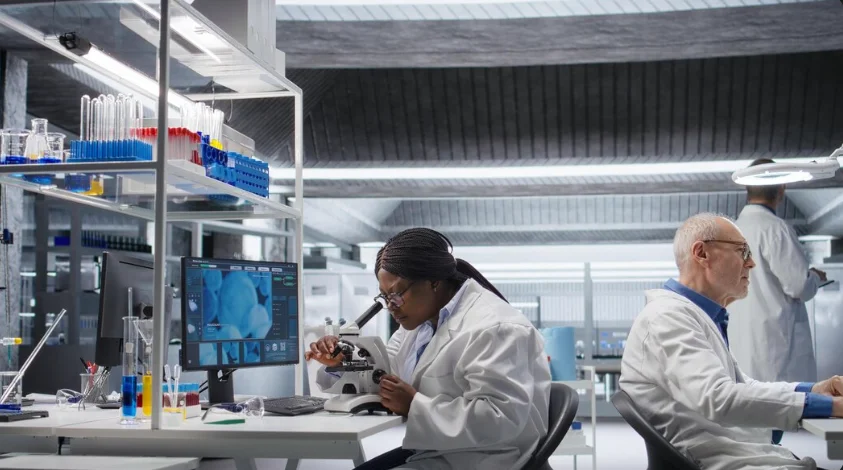
Industrial Laboratory Technology trains students to work in medical and diagnostic laboratories that support healthcare delivery. You will study anatomy, physiology, microbiology, clinical chemistry, hematology, infection control, and laboratory safety. The program focuses on practical skills such as specimen collection, laboratory testing, equipment operation, and basic health data management. Graduates can pursue careers as medical laboratory technicians, contribute to patient care in hospitals and clinics, or continue to related roles including public health officer, healthcare administrator, or further study toward nursing and physiotherapy. This course gives hands-on experience, prepares you for real-world health settings in Ghana, and opens pathways to stable and respected jobs in the health sector.
Aims & Objectives
Develop competence in safe specimen collection, handling, and preparation for common diagnostic tests, measured by practical assessments.
Master operation, routine maintenance, and basic troubleshooting of core laboratory equipment, demonstrated by practical exams.
Understand principles of microbiology, hematology, and clinical chemistry, assessed through written and practical tests.
Apply infection control procedures and laboratory safety standards in simulated and real clinical settings, evaluated by observed checklists.
Why Choose This Program?
High demand in healthcare
Medical laboratory skills are needed across hospitals, clinics, and public health programs in Ghana, offering steady job opportunities.
Hands-on practical training
Strong emphasis on laboratory practice and clinical attachments prepares you for real workplace tasks from day one.
Clear career pathways
Graduates can enter the workforce quickly or progress to further study in nursing, biomedical sciences, or public health.
Transferable technical skills
Skills in data management, quality control, and equipment use are useful across health and diagnostic industries.
Skills & Tools
Skills You'll Develop
Safe venipuncture, swab and urine collection techniques, labeling, centrifugation, and sample preservation for accurate testing.
Use of microscopes for parasite and blood smear examination, complete blood count basics, and slide preparation techniques.
Operation and routine maintenance of centrifuges, spectrophotometers, autoclaves, and basic point-of-care devices.
Recording test results, using spreadsheets and basic LIMS functions, and preparing reports for clinicians and public health use.
Tools & Resources
Microsoft Excel
Basic Laboratory Information Management System (LIMS)
Challenges & Tips
Challenges
Strong science background required
Learning practical techniques quickly
Tips & Advice
Strengthen biology and chemistry basics during SHS, use online tutorials, and practice regular revision.
Attend all lab sessions, ask instructors for demonstrations, and practice skills under supervision.
Video Guide
Frequently Asked Questions
Ready to Apply?
Find programs that match your grades and interests - even if you haven't written WASSCE yet
Loading.. Please wait.

Talk to a Professional
Join a mentorship session with real professionals working in your field of interest.
 Real industry professionals
 Small groups (10-15 students)
 Starting at GH₵ 15 per session