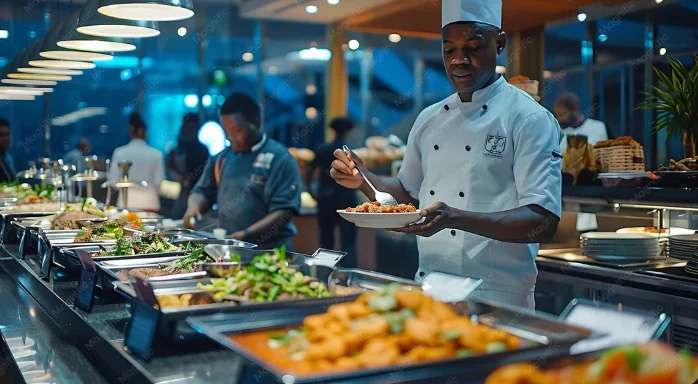
Hospitality Management and Catering Technology
Overview
Job Growth
N/A
Duration
N/A
Avg. Salary
N/A
Career Paths
N/A
Program Description
Hospitality Management and Catering Technology teaches practical and managerial skills for work in hotels, restaurants, catering and events. Students study culinary techniques, food safety and hygiene, service operations, front office work, menu planning, event management, basic accounting and customer relations. The program mixes hands-on kitchen and service practice with classroom lessons on culture, tourism and business. Career paths include chef, catering manager, hotel front desk officer, event planner, food entrepreneur and hospitality supervisor, with job opportunities in hotels, restaurants, airlines, event firms and tourism sites in Ghana and beyond. This course builds practical skills, confidence and creative ways to share Ghanaian food and culture with others.
Aims & Objectives
Develop practical culinary skills to prepare and present a variety of Ghanaian and international dishes under correct hygiene standards.
Master food safety principles, including HACCP basics, to ensure safe food handling and storage.
Understand hospitality operations by applying front office, housekeeping and service procedures in simulated environments.
Create and cost menus, and plan small to medium events, demonstrating basic budgeting and inventory control.
Why Choose This Program?
Strong local and international demand
Hotels, restaurants, event companies and airlines in Ghana and abroad need trained staff, offering many entry-level and supervisory roles.
Hands-on, practical training
You gain real kitchen and service experience through practical classes, role plays and industry visits that prepare you for work from day one.
Entrepreneurship and self-employment
Skills in catering, menu design and event planning make it easier to start small catering businesses, pop-up events or food brands.
Cultural and creative expression
The program lets you combine Ghanaian culinary traditions and hospitality culture with creative presentation and menu storytelling.
Skills & Tools
Skills You'll Develop
Practical skills in mise en place, cooking methods, portioning, plating and use of commercial kitchen equipment.
Knowledge of hygiene, temperature control, cross-contamination prevention and basic hazard analysis for safe food service.
Ability to plan menus, layout, service flow and staffing for events, including cost estimation and supplier coordination.
Familiarity with point of sale systems, reservation tools and basic guest registration and billing procedures.
Tools & Resources
Point of sale software (for example Micros, Toast)
Recipe and cost-control tools
Microsoft Excel for costing and inventory
Challenges & Tips
Challenges
Balancing theory and practical work
Understanding food science and costing
Tips & Advice
Use a study timetable that reserves time for both recipe practice and revision of management concepts, and link practical outcomes to theory.
Focus on core concepts like temperatures, portion sizes and unit costs, and practise calculations using simple Excel templates.
Video Guide
Frequently Asked Questions
Ready to Apply?
Find programs that match your grades and interests - even if you haven't written WASSCE yet
Loading.. Please wait.

Talk to a Professional
Join a mentorship session with real professionals working in your field of interest.
 Real industry professionals
 Small groups (10-15 students)
 Starting at GH₵ 15 per session