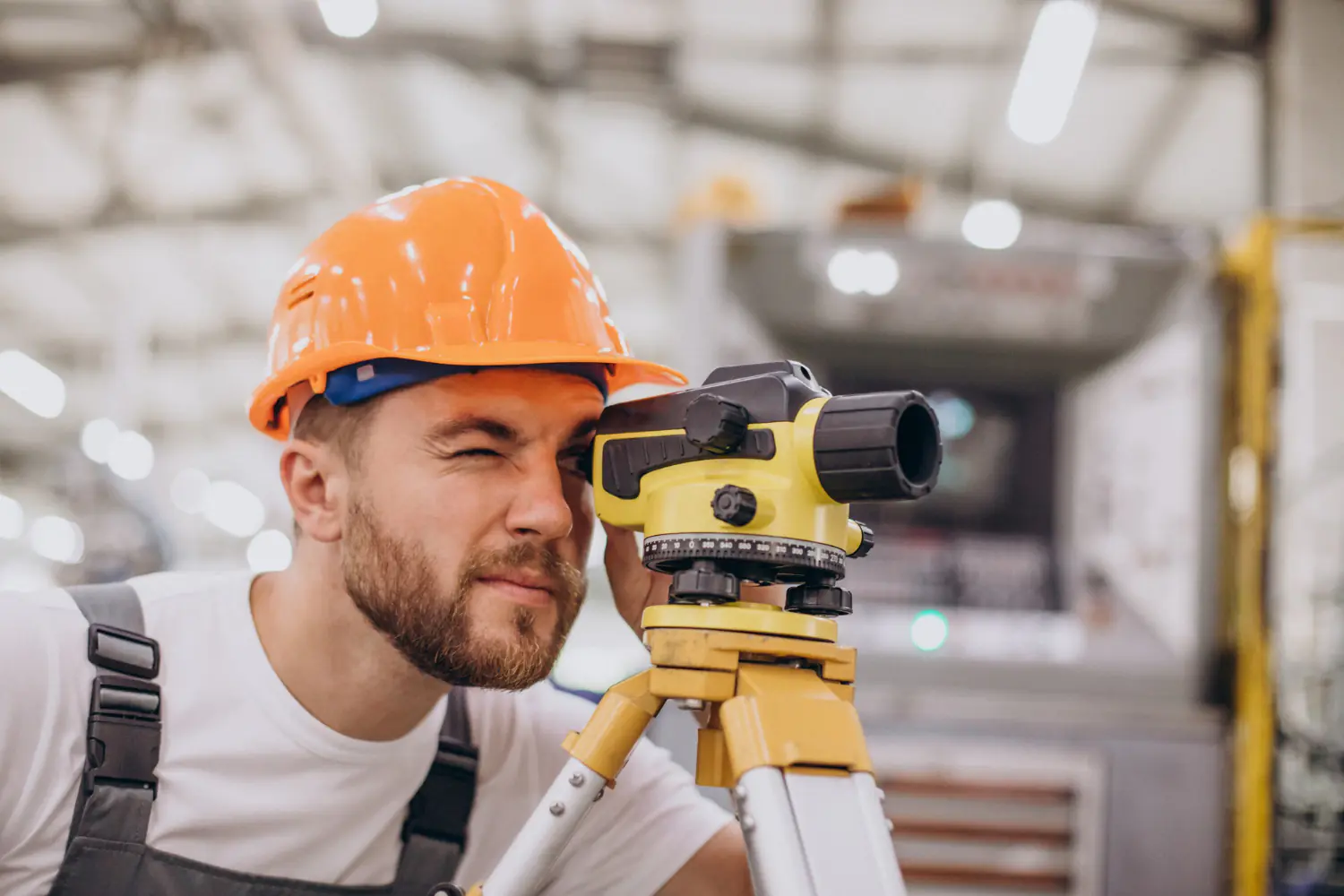
Geomatic (Geodetic) Engineering
Overview
Job Growth
N/A
Duration
N/A
Avg. Salary
N/A
Career Paths
N/A
Program Description
Geomatic (Geodetic) Engineering teaches you how to measure, map, and manage the Earth’s surface and built environment. You will learn surveying, GNSS/GPS positioning, geodesy, Geographic Information Systems (GIS), remote sensing, photogrammetry, CAD, programming basics and fieldwork methods. The program prepares you for roles such as land surveyor, GIS specialist, mapping engineer, cadastral officer, and technical support in construction, mining, oil & gas, and government planning. Through classroom theory and hands‑on field practice, you will build technical skills in data collection, mapping and spatial analysis that are in demand across Ghana’s growing infrastructure and development projects. This is a practical, technology-driven path that opens strong career and internship opportunities for motivated SHS students.
Aims & Objectives
Develop accurate field surveying skills using GNSS, total stations, and leveling so you can collect reliable spatial data.
Master GIS data creation, spatial analysis and map production to generate usable digital maps and reports.
Understand geodetic principles, coordinate systems and map projections and apply them to solve location problems.
Create and manipulate 2D/3D models and drawings using CAD and photogrammetry to support design and planning tasks.
Manage small field projects and produce clear technical documentation and presentations that meet industry standards.
Why Choose This Program?
Strong Job Demand
Ghana’s infrastructure growth needs surveyors and GIS experts for roads, construction, mining and land registration.
Hands‑On and Practical
You spend significant time in fieldwork and labs—ideal if you enjoy practical tasks and outdoor technical work.
Cross‑Sector Opportunities
Skills transfer to civil engineering, urban planning, mining, oil & gas, environmental monitoring and ICT.
Modern Technology Focus
Work with GNSS, drones, GIS and CAD—preparing you for automated mapping and smart infrastructure projects.
Internships & Industry Links
Programs often include internships, attachments with surveying firms, land offices and public works for real experience.
Skills & Tools
Skills You'll Develop
Use GPS/GNSS receivers and total stations to measure positions, distances and angles for accurate site control.
Collect, manage and analyze spatial data with GIS tools to make maps, run queries and support planning decisions.
Produce technical drawings and site plans in AutoCAD or similar software for construction and design documentation.
Process aerial or satellite imagery and drone data to create orthophotos, digital elevation models and 3D maps.
Clean and process measurement data using MATLAB or Python and automate workflows with scripting and software tools.
Tools & Resources
AutoCAD
MATLAB
Visual Studio Code
Microsoft Project
Challenges & Tips
Challenges
Complex mathematics and coordinate theory can be hard to grasp.
Balancing fieldwork and coursework workloads.
Keeping up with fast‑changing software tools.
Tips & Advice
Build strong basics in algebra and trigonometry; use visual aids and practice problem sets weekly.
Create a timetable that blocks study time around field trips and use short review sessions after practicals.
Follow online tutorials, take short courses on platforms like Coursera, and practice on real projects.
Video Guide
Frequently Asked Questions
Ready to Apply?
Find programs that match your grades and interests - even if you haven't written WASSCE yet
Loading.. Please wait.

Talk to a Professional
Join a mentorship session with real professionals working in your field of interest.
 Real industry professionals
 Small groups (10-15 students)
 Starting at GH₵ 15 per session