Food Science Technology
Overview
Job Growth
N/A
Duration
N/A
Avg. Salary
N/A
Career Paths
N/A
Program Description
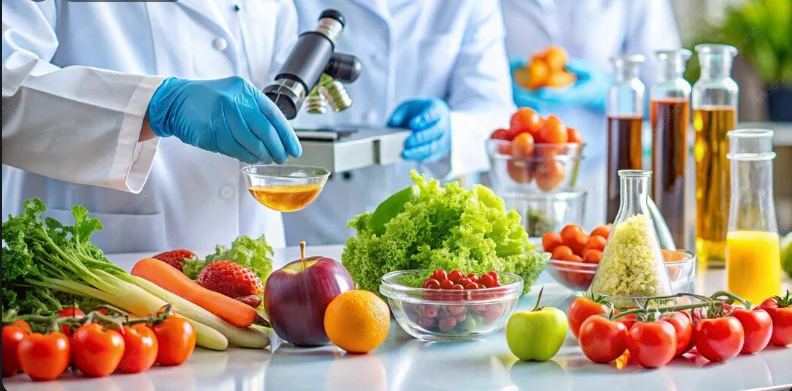
Food Science Technology teaches how food is made, tested, preserved, and made safe for consumers. You will study biology, chemistry, microbiology, nutrition, food processing, and laboratory methods. The program combines classroom theory with hands-on lab work in food analysis, quality control, and product development. Graduates can work as research scientists, laboratory technicians, quality control analysts, environmental scientists, or science teachers. This course opens doors in Ghana's food processing industry, public health laboratories, and research institutes. If you enjoy experiments, problem solving, and improving the food people eat, this program will give you practical skills and clear career pathways.
Aims & Objectives
Develop safe laboratory skills, including correct handling of equipment and adherence to safety protocols, measured by successful practical assessments.
Master basic food chemistry and microbiology concepts, demonstrated by passing theory exams and laboratory reports.
Apply research methodology to design and conduct simple experiments, documented in reproducible lab notebooks and project reports.
Use data collection and statistical analysis to interpret results, shown by accurate data tables, graphs, and written conclusions.
Why Choose This Program?
Strong job demand in Ghana
Ghana's growing food processing and agribusiness sectors need graduates for quality control, product development, and safety roles.
Hands-on laboratory training
You gain practical experience with food analysis and testing, making you work-ready for labs and industry.
Clear career pathways
The program leads to roles in research, industry, public health, and teaching, with opportunities to specialize further.
Internships and industry links
Many programs partner with food processors, inspection services, and research centers for placements and real-world projects.
Skills & Tools
Skills You'll Develop
Learn aseptic technique, sample preparation, use of glassware, and chemical safety to run food tests without contamination or risk.
Operate and interpret results from tools such as spectrophotometers, pH meters, and analytical balances for composition analysis.
Record experimental data accurately and use Excel or basic statistical software to calculate means, variances, and significance.
Design and run taste, texture, and shelf-life tests to evaluate product quality and consumer acceptability.
Tools & Resources
Microsoft Excel
R or SPSS for basic statistics
Laboratory information management system (LIMS) where available
Challenges & Tips
Challenges
Intensive lab work and technical theory
Mathematics and statistics requirements
Tips & Advice
Practice regular lab sessions, review theory before practicals, and form study groups to reinforce concepts.
Use tutorials, seek help from teachers, and practice with real datasets to build confidence.
Video Guide
Frequently Asked Questions
Ready to Apply?
Find programs that match your grades and interests - even if you haven't written WASSCE yet
Loading.. Please wait.

Talk to a Professional
Join a mentorship session with real professionals working in your field of interest.
 Real industry professionals
 Small groups (10-15 students)
 Starting at GH₵ 15 per session