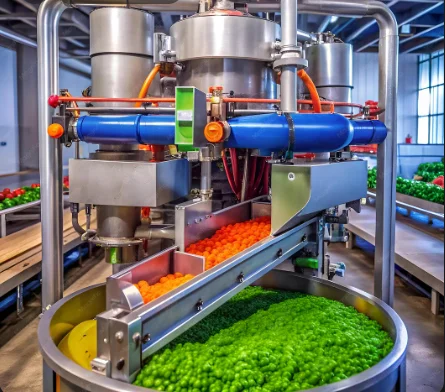
Food Manufacturing Technology
Overview
Job Growth
N/A
Duration
N/A
Avg. Salary
N/A
Career Paths
N/A
Program Description
Food Manufacturing Technology teaches you how to design, build, operate, and maintain food production systems. You will study food science, processing technology, quality control, engineering maths, and basic electronics and automation used in factories. The program combines classroom theory with hands-on labs and projects to prepare you for work in food factories, quality assurance, production supervision, equipment maintenance, and process design. Graduates can find roles as production technicians, quality control officers, process engineers, or start small food processing businesses. This course is ideal if you enjoy practical problem solving, technology, and making safe, affordable food for communities.
Aims & Objectives
Develop practical skills in operating and maintaining food processing equipment, measured by successful lab assessments and projects
Master basic process design and production planning, demonstrated by designing a pilot production line project
Understand food safety and quality management systems, shown by applying HACCP principles in practical exercises
Create and test simple automated controls for production tasks, evidenced by functioning PLC or sensor-based prototypes
Why Choose This Program?
Strong job demand in Ghana
Food processing is a growing sector in Ghana, offering roles in factories, agroprocessing centers, and food service suppliers.
Hands-on, practical learning
You gain real experience with equipment, lab testing, and pilot production, making you work-ready after training.
Pathway to higher studies and entrepreneurship
The program prepares you for HND or university degrees in engineering or food science, and for starting small food businesses.
Industry connections and internships
Many programs partner with local processors for workplace attachments, exposure to real manufacturing environments, and mentorship.
Skills & Tools
Skills You'll Develop
Use drawing tools to layout equipment and design simple production lines for mixing, heating, and packaging.
Apply HACCP principles, perform laboratory tests, and use sampling plans to ensure safe, compliant products.
Program and troubleshoot basic PLCs and sensors to automate filling, sorting, and temperature control tasks.
Use statistical tools to analyse production data, control quality, and model process performance for improvements.
Tools & Resources
CAD software such as SolidWorks or AutoCAD
PLC programming environments like Siemens TIA Portal or open-source alternatives
Statistical software or tools such as Minitab or Excel
Challenges & Tips
Challenges
Strong background in chemistry and maths required
Balancing theory and practical work
Tips & Advice
Strengthen fundamentals with extra classes, practice problems, and simple experiments to build confidence.
Use time blocks for lab practice after reviewing theory, and form study groups to reinforce learning.
Video Guide
Frequently Asked Questions
Ready to Apply?
Find programs that match your grades and interests - even if you haven't written WASSCE yet
Loading.. Please wait.

Talk to a Professional
Join a mentorship session with real professionals working in your field of interest.
 Real industry professionals
 Small groups (10-15 students)
 Starting at GH₵ 15 per session