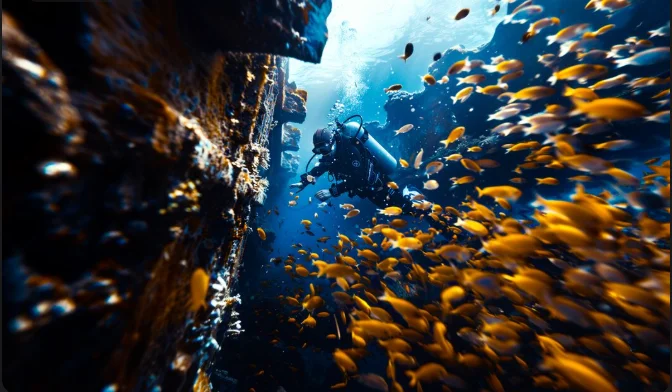
Fisheries and Aquatic Science
Overview
Job Growth
N/A
Duration
N/A
Avg. Salary
N/A
Career Paths
N/A
Program Description
Fisheries and Aquatic Science teaches how to manage and conserve fish and aquatic environments for food, income, and healthy ecosystems. You will learn fish biology, aquaculture, pond and hatchery management, water quality, and basic ecology, along with practical field and lab work. The program prepares you for jobs such as fish farmer, fisheries officer, hatchery manager, aquaculture technician, and roles in environmental conservation and natural resource management. It builds practical skills that let you start small-scale fish enterprises, work with government conservation programs, or continue to higher study. If you care about food security, sustainable jobs, and protecting Ghana's water resources, this program is a good and rewarding choice.
Aims & Objectives
Develop practical skills in pond and hatchery management, demonstrated by completing at least one supervised fish production project.
Master basic water quality monitoring techniques, shown by performing regular pH, dissolved oxygen, and temperature tests during practical sessions.
Understand fish biology and aquatic ecology, measured by passing theory and practical assessments on life cycles, feeding, and habitat needs.
Apply sustainable farming practices and biosecurity measures, proven by preparing management plans that reduce disease and environmental impact.
Why Choose This Program?
Strong job demand
Aquaculture and fisheries support food security in Ghana, creating steady demand for trained technicians, farm managers, and conservation officers.
Practical, hands-on learning
You spend time in ponds, hatcheries, and labs, gaining skills you can use immediately to start a small enterprise or get field work.
Pathways to further study and public service
The program leads to higher education and careers in fisheries departments, environmental agencies, NGOs, and private aquaculture businesses.
Contribution to sustainable development
You learn methods that increase fish production while protecting water resources and local ecosystems, making your work socially valuable.
Skills & Tools
Skills You'll Develop
Measure pH, dissolved oxygen, temperature, and turbidity using portable meters and test kits to maintain healthy culture conditions.
Design and operate ponds and hatcheries, manage feeding regimes, stocking densities, and disease prevention for productive systems.
Collect growth, feed conversion, and mortality data, use spreadsheets and basic statistics to assess performance and make management decisions.
Apply broodstock selection, spawning induction, and nursery care methods to increase survival and quality of fingerlings.
Tools & Resources
Microsoft Excel for data recording and analysis
QGIS or basic mapping tools for site planning
Challenges & Tips
Challenges
Difficulty with science and mathematics concepts used in water chemistry and data analysis
Tips & Advice
Practice basic math and chemistry problems, join study groups, and ask teachers for extra practical examples tied to field work.
Video Guide
Frequently Asked Questions
Ready to Apply?
Find programs that match your grades and interests - even if you haven't written WASSCE yet
Loading.. Please wait.

Talk to a Professional
Join a mentorship session with real professionals working in your field of interest.
 Real industry professionals
 Small groups (10-15 students)
 Starting at GH₵ 15 per session