Fire, Safety and Disaster Management
Overview
Job Growth
N/A
Duration
N/A
Avg. Salary
N/A
Career Paths
N/A
Program Description
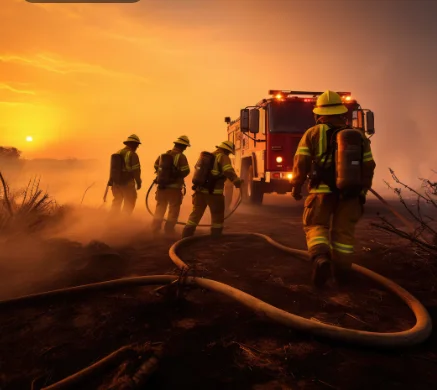
Fire, Safety and Disaster Management teaches students how natural and human-caused hazards start, spread, and can be controlled. You will study fire science, chemistry of combustion, physics of heat transfer, environmental science, first aid, risk assessment, emergency planning, and basic statistics for incident analysis. The program includes lab work, field drills, and community safety education. Graduates can work as safety officers, emergency response coordinators, disaster risk management assistants, fire prevention inspectors, or continue to higher education in environmental science, public health, or engineering. This course builds practical skills, scientific reasoning, and confidence to protect people, property, and the environment.
Aims & Objectives
Develop accurate hazard and risk assessments using field checks and basic statistical analysis.
Master operation and basic maintenance of common safety equipment, including fire extinguishers and detectors.
Understand the disaster management cycle, and create clear emergency response and evacuation plans.
Apply first aid and basic rescue techniques in simulated emergency scenarios, demonstrating competence.
Document incidents and produce scientific reports using standard formats and evidence-based recommendations.
Why Choose This Program?
High demand for safety professionals
Industries in Ghana such as mining, construction, oil and gas, and municipal services need trained safety and disaster personnel.
Hands-on, practical learning
Students do lab experiments, field drills, and simulations that build real skills employers value.
Clear career pathways and further study
You can enter the workforce quickly or progress to tertiary programs in environmental science, public health, or engineering.
Community impact and relevance
You gain skills to protect communities during floods, fires, and other emergencies, making work meaningful and visible.
Skills & Tools
Skills You'll Develop
Use checklists, qualitative scoring, and simple statistical methods to identify and prioritise hazards at sites.
Operate and maintain extinguishers, smoke detectors, and basic suppression tools safely, and understand their principles.
Apply structured response protocols, communication procedures, and on-scene coordination during drills and incidents.
Use mapping tools and spreadsheet/statistical software to analyse incident patterns and plan mitigation measures.
Tools & Resources
QGIS or other GIS mapping tools
Spreadsheet and statistical tools (Excel, R or SPSS)
Incident reporting or management software
Challenges & Tips
Challenges
Strong science and maths requirements
Tips & Advice
Attend extra lessons, form study groups, and focus on practical labs to strengthen understanding.
Video Guide
Frequently Asked Questions
Ready to Apply?
Find programs that match your grades and interests - even if you haven't written WASSCE yet
Loading.. Please wait.

Talk to a Professional
Join a mentorship session with real professionals working in your field of interest.
 Real industry professionals
 Small groups (10-15 students)
 Starting at GH₵ 15 per session