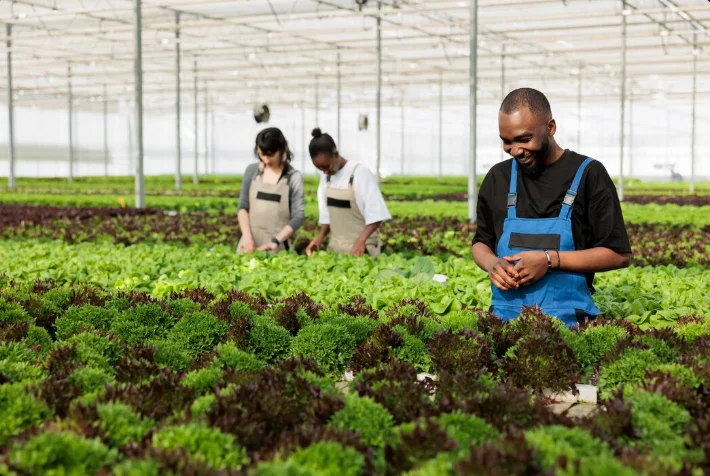
Ecological Agriculture
Overview
Job Growth
N/A
Duration
N/A
Avg. Salary
N/A
Career Paths
N/A
Program Description
Ecological Agriculture teaches how to grow food while protecting the environment and using resources wisely. You will study soil science, crop management, agroforestry, water conservation, pest management, and basics of ecology and environmental conservation. Classes include practical farm work, field studies, and laboratory tests to understand how farms and ecosystems interact. Graduates can become agronomists, soil scientists, farm managers, conservation officers, or environmental scientists, and can work with farms, government extension services, research institutes, and conservation groups. This program prepares you to build sustainable farms, improve soil health, and support Ghana's food security and natural resources in a rewarding career.
Aims & Objectives
Develop ability to conduct basic soil tests and interpret results to guide crop selection and fertilizer use.
Master sustainable farming practices, including crop rotation, agroforestry, and water conservation, and apply them on a demonstration plot.
Understand environmental impact assessment principles and use them to plan farm activities that protect natural resources.
Create simple farm business plans and record-keeping systems to measure productivity and economic viability.
Why Choose This Program?
High demand for sustainable food production
Ghana needs experts who can increase yields while protecting the environment, creating strong job prospects in public and private sectors.
Hands-on learning and practical experience
Students work on school farms and in labs, gaining real skills in soil testing, crop management, and conservation techniques.
Diverse career paths and mobility
Training opens doors to roles in agronomy, conservation, farm management, research, and extension services.
Industry links and internship opportunities
Opportunities exist to work with Ghanaian Ministry of Food and Agriculture extension units, research institutes, and NGOs for field placements.
Skills & Tools
Skills You'll Develop
Perform soil sampling, basic laboratory tests, and recommend soil amendments and crop rotations to improve yield and soil health.
Assess farm practices for effects on water, soil, and biodiversity, and design measures to reduce negative impacts.
Employ GPS mapping, basic digital record keeping, and mobile farm management apps to plan fields and track production.
Collect field data, record observations, and use spreadsheets or simple GIS to make decisions and monitor results.
Tools & Resources
QGIS or simple mapping tools
Spreadsheet software such as Microsoft Excel or Google Sheets
Mobile farm management apps
Challenges & Tips
Challenges
Balancing practical fieldwork with classroom study
Understanding scientific concepts like soil chemistry
Tips & Advice
Use a weekly timetable to allocate time for readings and hands-on tasks, and coordinate with teachers for catch-up sessions.
Relate theory to hands-on tests on the school farm and ask teachers for simple demonstrations and examples.
Video Guide
Frequently Asked Questions
Ready to Apply?
Find programs that match your grades and interests - even if you haven't written WASSCE yet
Loading.. Please wait.

Talk to a Professional
Join a mentorship session with real professionals working in your field of interest.
 Real industry professionals
 Small groups (10-15 students)
 Starting at GH₵ 15 per session