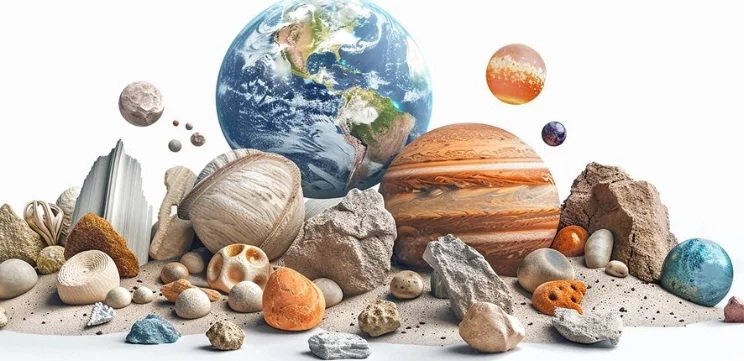
Earth Science
Overview
Job Growth
N/A
Duration
N/A
Avg. Salary
N/A
Career Paths
N/A
Program Description
Earth Science explores the physical processes that shape our planet, from rocks and soils to weather and oceans. In this program you will study geology, meteorology, oceanography, environmental science, and practical laboratory work drawing on chemistry, biology, physics, and mathematics. You will learn to collect field data, run experiments, analyse results, and report findings. Graduates can pursue careers as research scientists, laboratory technicians, environmental scientists, science teachers, or quality control analysts, and can work in government agencies, mining, water resources, and environmental consultancies. This programme builds strong practical skills that prepare you for tertiary study and for real-world jobs that help protect Ghana's environment and resources.
Aims & Objectives
Develop practical field sampling and laboratory techniques for analyzing rocks, soils, water, and air, measured by field reports and lab logs.
Master data collection and basic statistical analysis, demonstrated through lab worksheets and project spreadsheets.
Understand core concepts in geology, meteorology, and oceanography, assessed by written tests and presentations.
Create clear scientific reports and posters following standard scientific writing and documentation practices.
Why Choose This Program?
Hands-on field and lab experience
You get practical skills in sampling, microscopy, and basic instrumentation that employers and universities value.
Strong career prospects
Skills apply to mining, water management, environmental monitoring, education, and quality control roles in Ghana and beyond.
Direct link to environmental and national priorities
Work contributes to solutions for climate resilience, water safety, and natural resource management, areas with growing demand.
Pathway to higher study and internships
Completing the programme prepares you for university geology, meteorology, environmental science, and for internships with government and NGOs.
Skills & Tools
Skills You'll Develop
Proper sample handling, use of microscopes, basic chemical tests, and safe laboratory practice for accurate results.
Collection of soil, rock, and water samples, use of GPS and simple mapping methods to record field observations.
Recording measurements, organising data, using spreadsheets and basic statistics to interpret results.
Preparing lab reports, posters, and clear written explanations using standard scientific formats.
Tools & Resources
Spreadsheet software (Microsoft Excel or Google Sheets)
QGIS or Google Earth for mapping
Challenges & Tips
Challenges
Difficulty with mathematics and statistics used in data analysis
Understanding abstract concepts in geology and meteorology
Tips & Advice
Practice basic algebra and statistics, use online tutorials, and ask teachers for targeted exercises.
Use models, maps, and hands-on samples to link theory to real examples during fieldwork.
Video Guide
Frequently Asked Questions
Ready to Apply?
Find programs that match your grades and interests - even if you haven't written WASSCE yet
Loading.. Please wait.

Talk to a Professional
Join a mentorship session with real professionals working in your field of interest.
 Real industry professionals
 Small groups (10-15 students)
 Starting at GH₵ 15 per session