Diagnostic Imaging Technology
Overview
Job Growth
N/A
Duration
N/A
Avg. Salary
N/A
Career Paths
N/A
Program Description
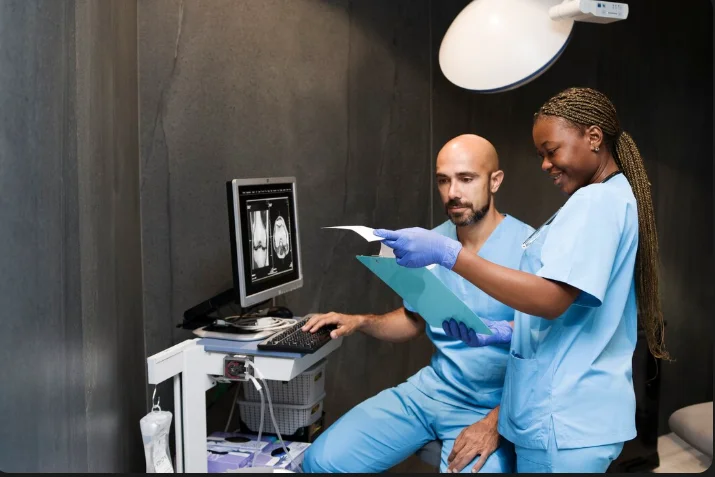
Diagnostic Imaging Technology trains students to use medical imaging equipment to help diagnose and monitor illness. You will study anatomy, physiology, radiographic techniques, ultrasound scanning, radiation safety, image processing, and patient care. The program combines classroom theory, hands-on lab practice, and clinical placements in hospitals so you gain real experience operating X-ray and ultrasound machines, producing clear images, and protecting patients. Graduates can work as radiography technicians, sonographers, imaging assistants, or progress to roles in hospital administration and medical imaging services in public and private facilities. If you enjoy science, technology, and helping people, this program prepares you for a respected and growing career in Ghanaian healthcare.
Aims & Objectives
Develop competency in operating X-ray and ultrasound equipment and producing diagnostic quality images, demonstrated by practical exams and clinical logs.
Master patient positioning and assessment skills, measured by competency checklists and supervised clinical evaluations.
Understand and apply radiation protection and infection control procedures, verified by safety tests and observed practice.
Manage imaging data and medical documentation, including basic use of PACS and accurate record keeping, assessed through coursework and clinical tasks.
Why Choose This Program?
High demand in healthcare
Hospitals and clinics across Ghana need qualified imaging staff, creating steady job opportunities in both public and private sectors.
Hands-on clinical training
Structured lab work and clinical placements give real patient contact and supervised practice, building confidence and employability.
Clear career pathways
Graduates can work as technicians or sonographers and progress to specialized roles or further study in medical imaging and healthcare management.
Modern technical skills
You learn to use digital imaging systems and data management tools that are increasingly used in Ghanaian hospitals, making your skills relevant and future proof.
Skills & Tools
Skills You'll Develop
Safe setup and operation of X-ray and ultrasound machines, including exposure settings, portable units, and basic troubleshooting.
Assess patient needs, obtain informed consent, and position patients correctly to obtain diagnostically useful images while ensuring comfort and safety.
Apply ALARA principles, use shielding and dosimetry, and follow sterilization and hygiene protocols to protect patients and staff.
Use PACS and DICOM viewers for image retrieval and storage, perform basic image enhancement, and complete accurate medical documentation.
Tools & Resources
PACS (Picture Archiving and Communication System)
DICOM viewer
Image processing software for radiography
Challenges & Tips
Challenges
Complex science and physics concepts
Balancing theory with practical workload
Tips & Advice
Strengthen basics in biology and physics early, use visual aids, and join study groups to review difficult topics.
Create a weekly schedule that blocks time for reading, lab practice, and clinical preparation to stay organized.
Video Guide
Frequently Asked Questions
Ready to Apply?
Find programs that match your grades and interests - even if you haven't written WASSCE yet
Loading.. Please wait.

Talk to a Professional
Join a mentorship session with real professionals working in your field of interest.
 Real industry professionals
 Small groups (10-15 students)
 Starting at GH₵ 15 per session