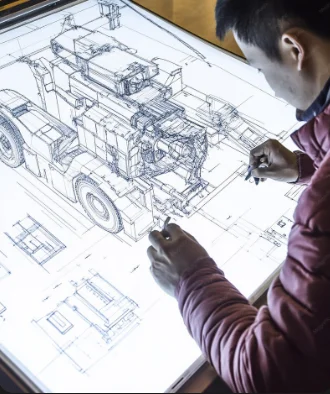
Design and Manufacturing Engineering
Overview
Job Growth
N/A
Duration
N/A
Avg. Salary
N/A
Career Paths
N/A
Program Description
Design and Manufacturing Engineering teaches you how to design, build, and maintain technological systems and products. You will study CAD drawing and 3D modelling, materials and manufacturing processes, basic electronics and programming, mathematics for engineering, and project work including prototyping and testing. The program emphasizes hands on practice, problem solving, and technical documentation. Graduates can move into roles such as mechanical, electrical, civil, or software engineering pathways, manufacturing technician, product designer, or IT support specialist. This program prepares you for further university study, technical college diplomas, internships in industry, and careers that shape Ghanaian infrastructure and technology. Stay curious and creative, because this field rewards practical skill and innovation.
Aims & Objectives
Develop accurate 3D CAD models and technical drawings suitable for prototyping and production, measurable by completed project files.
Master common manufacturing processes, including machining, casting, and additive manufacturing, shown by producing working prototypes.
Understand material properties and selection through simple tests and calculations, demonstrated by lab reports and material choice justifications.
Create and test automated or electronic control elements using basic programming and microcontrollers, validated by functioning project demonstrations.
Manage small engineering projects with schedules, cost estimates, and technical documentation, evidenced by completed project portfolios.
Why Choose This Program?
Hands on learning and prototyping
You build real models and prototypes, so classroom ideas become practical skills employers and workshops value.
Strong career flexibility
Skills transfer to civil, mechanical, electrical, software roles and technical technician jobs across Ghanaian industry.
Industry connections and internships
Programs often link to local manufacturers, workshops, and tech hubs that offer internships and practical placements.
Pathway to entrepreneurship
You can design and produce products or provide fabrication services, enabling small business and innovation opportunities.
Skills & Tools
Skills You'll Develop
Use tools such as Fusion 360, AutoCAD, or SolidWorks to create 2D drawings and 3D models for manufacture and prototyping.
Write basic code for microcontrollers and PLCs, using Arduino IDE or similar tools to control motors, sensors, and prototypes.
Understand machining, 3D printing, and CNC operation so you can plan and produce physical parts accurately.
Apply engineering mathematics and simple stress or performance calculations to size parts and predict behavior.
Tools & Resources
Fusion 360 or SolidWorks for CAD
AutoCAD for technical drawings
Arduino IDE for microcontroller programming
MATLAB or spreadsheet tools for calculations
Challenges & Tips
Challenges
Heavy emphasis on mathematics and physics
Balancing theory and hands on practice
Tips & Advice
Build strong basics early, use online tutorials, and practice problem sets regularly to improve confidence.
Allocate weekly lab time, join clubs, and turn class projects into tangible builds to reinforce learning.
Video Guide
Frequently Asked Questions
Ready to Apply?
Find programs that match your grades and interests - even if you haven't written WASSCE yet
Loading.. Please wait.

Talk to a Professional
Join a mentorship session with real professionals working in your field of interest.
 Real industry professionals
 Small groups (10-15 students)
 Starting at GH₵ 15 per session