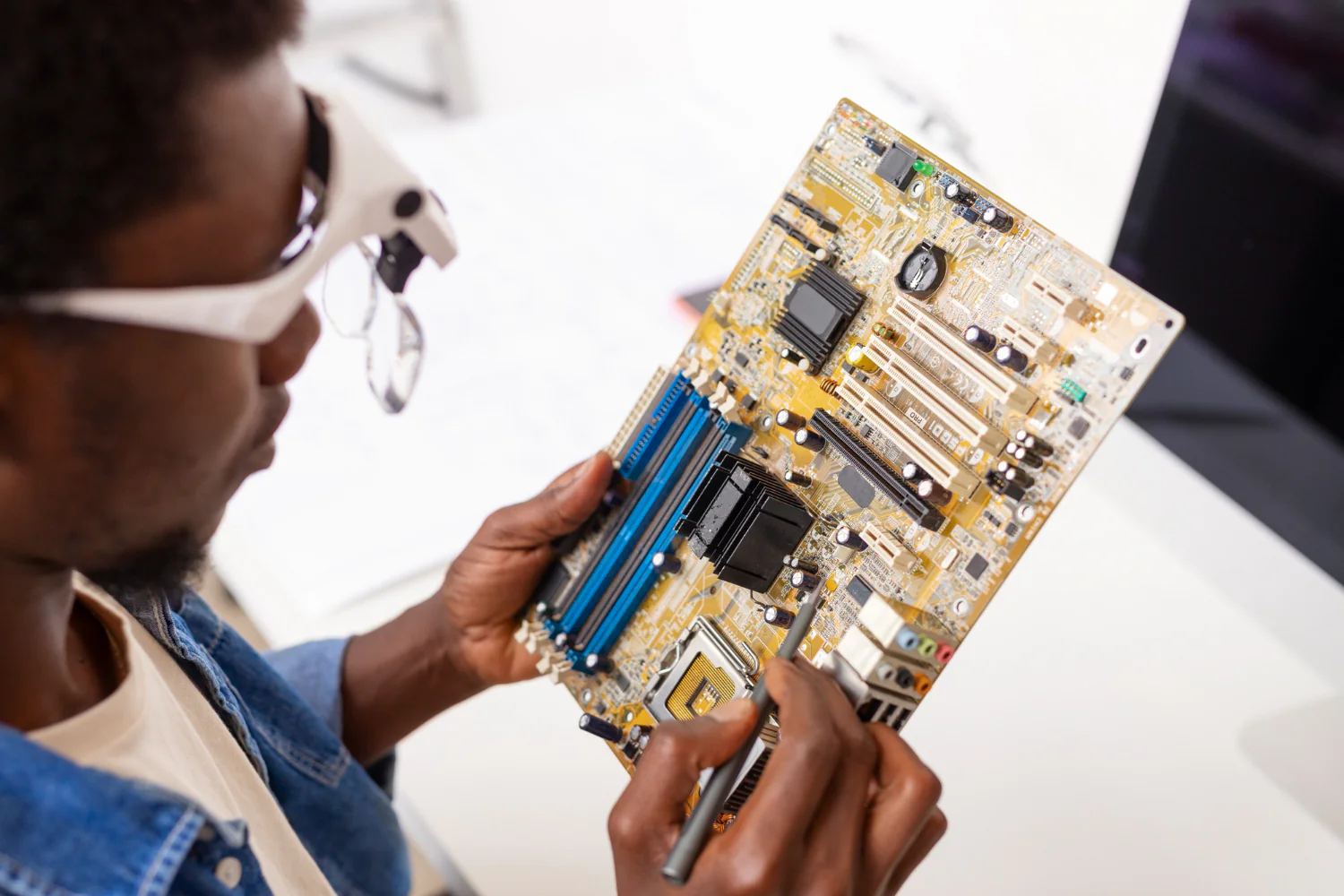
Computer Engineering
Overview
Job Growth
N/A
Duration
N/A
Avg. Salary
N/A
Career Paths
N/A
Program Description
Computer Engineering is a program that combines both electrical engineering and computer science. It focuses on how computers work, from the physical hardware inside devices to the software that runs them. As a computer engineering student, you’ll learn how to design and build computer systems, mobile devices, and smart technologies. You’ll also learn how to program, solve problems using technology, and work on things like networks, robotics, and embedded systems. If you’re curious about how computers and gadgets work, enjoy solving problems with code, or want to build the next big tech innovation, Computer Engineering could be the right path for you.
Aims & Objectives
To understand the principles of how computers and digital hardware systems operate.
To develop strong programming and software development skills across multiple languages.
To gain the ability to design and build digital and embedded systems.
To enhance analytical and problem-solving skills using engineering and computing principles.
To prepare students for professional careers or advanced studies in computing, electronics, or related fields.
To encourage innovation through hands-on projects and real-world application of computer engineering concepts.
To build effective communication and teamwork abilities within technical project environments.
To promote ethical responsibility and awareness of technology’s impact on society.
Why Choose This Program?
High Demand in the Job Market
Computer Engineering graduates are highly sought after in industries like tech, finance, healthcare, and manufacturing because of their ability to build and maintain modern technology systems.
Blend of Hardware and Software Skills
The program offers a unique combination of electrical engineering and computer science, giving you a well-rounded skillset that opens multiple career paths.
Opportunities for Innovation
You’ll get to work on exciting projects like robotics, AI systems, smart devices, and mobile apps — perfect for students who want to create real-world solutions.
Strong Foundation for Further Studies
Computer Engineering prepares you for master’s and PhD programs in specialized fields like Artificial Intelligence, Cybersecurity, Data Science, or Embedded Systems.
Versatility Across Industries
Skills gained in this program are applicable across various sectors, from building software for mobile phones to designing control systems for cars and medical devices.
Tech Entrepreneurship Potential
If you dream of starting your own tech business or launching a startup, this program equips you with the technical and problem-solving skills to do so.
Skills & Tools
Skills You'll Develop
You’ll learn how to write and debug code in languages like C, C++, Python, or Java.
Understand how circuits and logic gates work to process information inside computers.
Learn to design and program systems that control machines, robots, and devices.
Gain knowledge about how data moves between computers, the internet, and servers.
Learn to build and test small computing devices and components.
Learn how to create apps, tools, and systems that run on various devices.
Tools & Resources
MATLAB – Used for simulations, data analysis, and system modeling.
Arduino IDE – Programming microcontrollers for embedded systems projects.
Python & C++ – Core programming languages for systems and application development.
Proteus – For designing and simulating electronic circuits.
Xilinx ISE/Vivado – For FPGA design and digital system development.
Visual Studio Code – Popular environment for writing, debugging, and managing code.
Wireshark – Tool for analyzing and troubleshooting network protocols.
Challenges & Tips
Challenges
Struggling to grasp abstract concepts like algorithms, circuits, and microarchitecture.
Heavy workload and tight project deadlines.
Difficulty balancing theory with hands-on application.
Tips & Advice
Break complex topics into smaller parts and use visual aids or simulators to understand how things work.
Create a realistic schedule and use tools like Trello or Notion to organize tasks early.
Join engineering clubs, hackathons, or take on mini-projects to reinforce learning through practice.
Video Guide
Frequently Asked Questions
Ready to Apply?
Find programs that match your grades and interests - even if you haven't written WASSCE yet
Loading.. Please wait.

Talk to a Professional
Join a mentorship session with real professionals working in your field of interest.
 Real industry professionals
 Small groups (10-15 students)
 Starting at GH₵ 15 per session