Chemistry Education
Overview
Job Growth
N/A
Duration
N/A
Avg. Salary
N/A
Career Paths
N/A
Program Description
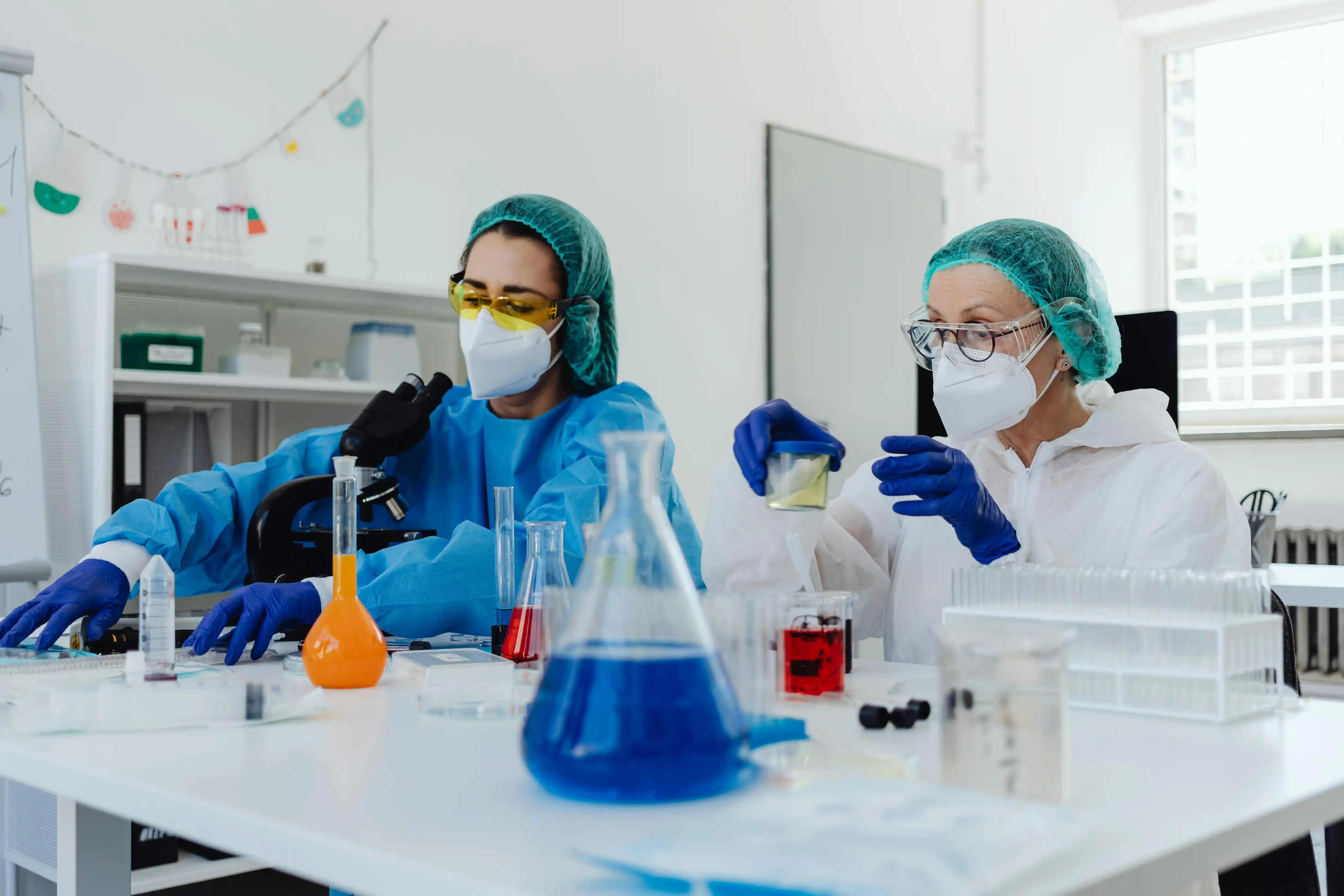
Chemistry Education trains you to teach chemistry in schools while learning how students learn best. You will study core chemistry topics such as atomic structure, bonding, acids and bases, organic chemistry and analytical methods, together with education subjects like lesson planning, classroom management, assessment, child development and teaching practice. The program combines laboratory work, practical demonstrations and teaching exercises so you gain both science knowledge and classroom skills. Graduates can become secondary school teachers, educational administrators, curriculum developers, special education specialists or educational consultants. This program prepares you to inspire young learners, design effective lessons, and use modern teaching tools to make chemistry relevant and exciting in Ghanaian classrooms.
Aims & Objectives
Develop safe and accurate practical laboratory skills to perform and explain common chemistry experiments.
Master lesson planning and curriculum mapping to prepare clear, syllabus-aligned chemistry lessons.
Understand assessment methods to design and mark formative and summative tests fairly and effectively.
Create inclusive and engaging learning activities that support diverse learners, including those with special needs.
Apply educational technology and classroom management techniques to improve student learning outcomes.
Why Choose This Program?
Strong job demand
Qualified chemistry teachers are needed in Ghanaian SHS and junior high schools, and demand grows with expanding science programs.
Hands-on laboratory training
You get practical lab experience that builds confidence to teach experiments safely and effectively.
Direct link to education careers
Training prepares you for teaching, curriculum work, administration, special education, and consultancy roles.
Modern teaching tools
You learn to use educational technology, simulations and low-cost demonstrations to make chemistry accessible.
School placements and partnerships
Programs often include supervised teaching practice and links with local schools and Colleges of Education for internships.
Skills & Tools
Skills You'll Develop
Map lessons to the Ghanaian syllabus, set objectives, sequence topics, and design measurable learning outcomes.
Use balances, pipettes, titration equipment, pH meters and follow safety protocols to run demonstrations and experiments.
Design formative and summative tests, use rubrics, analyze results and give feedback to improve student learning.
Apply tools such as PhET simulations, Google Classroom, presentation software and video demonstrations to support teaching.
Create lesson materials adapted for mixed-ability classes, using scaffolding, practical tasks and inclusive strategies.
Tools & Resources
PhET Interactive Simulations
ChemDraw or simple molecular editors
Google Classroom
Microsoft Office or LibreOffice
Challenges & Tips
Challenges
Heavy syllabus and complex concepts
Limited access to lab equipment during study
Tips & Advice
Break topics into small parts, use visual aids and study groups to master each concept step by step.
Practice using low-cost demonstrations, simulations and safe home experiments to build skill.
Video Guide
Frequently Asked Questions
Ready to Apply?
Find programs that match your grades and interests - even if you haven't written WASSCE yet
Loading.. Please wait.

Talk to a Professional
Join a mentorship session with real professionals working in your field of interest.
 Real industry professionals
 Small groups (10-15 students)
 Starting at GH₵ 15 per session