Biological Sciences
Overview
Job Growth
N/A
Duration
N/A
Avg. Salary
N/A
Career Paths
N/A
Program Description
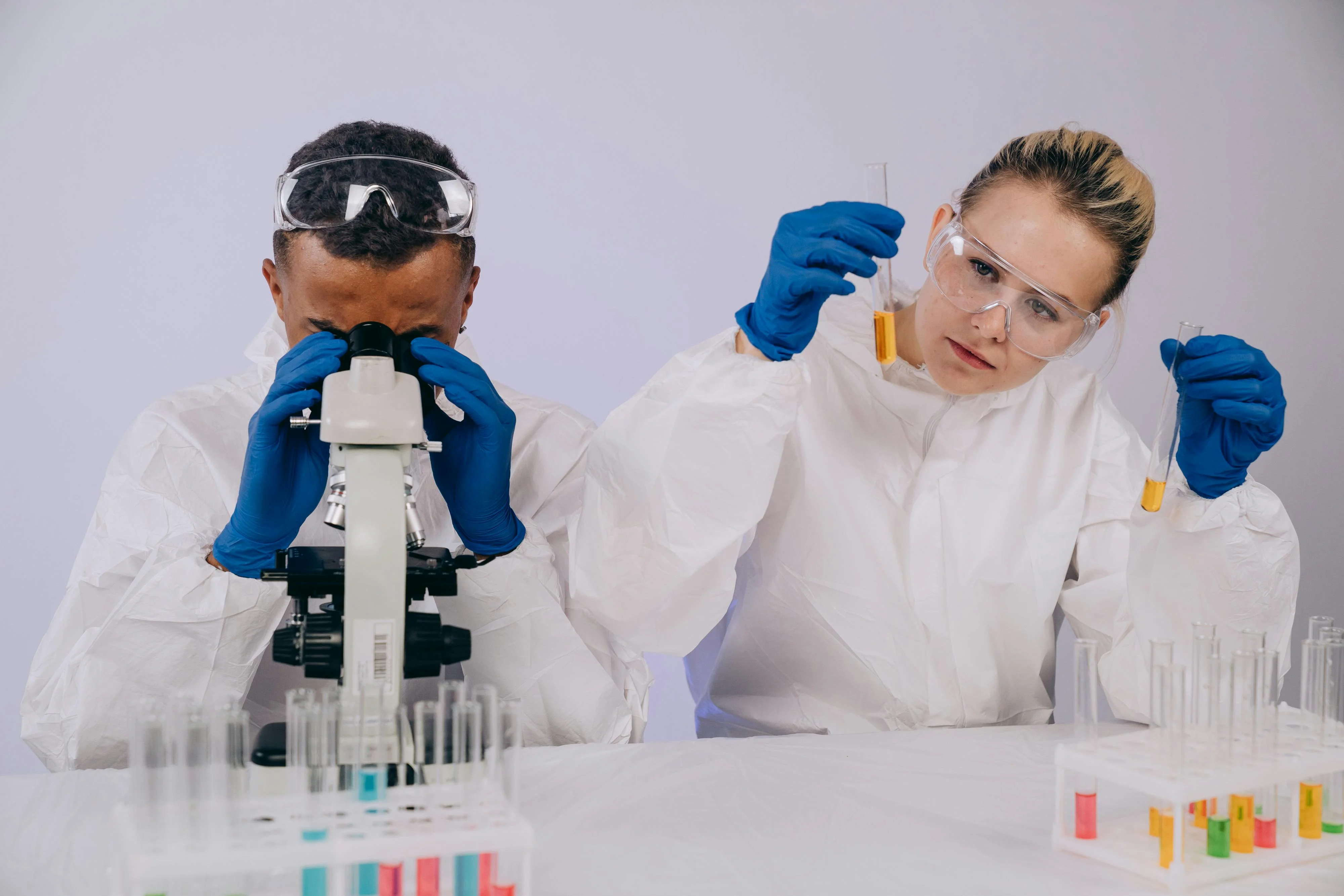
Biological Sciences explores living systems and how organisms interact with each other and the environment. You will study biology, chemistry, physics, mathematics, and environmental science, and spend time in the laboratory learning experiments, observation, and data recording. The program teaches research methods, laboratory safety, and scientific reporting. Graduates can work as research scientists, laboratory technicians, environmental scientists, science teachers, or quality control analysts in hospitals, industry, environmental agencies, and schools. This course builds practical skills and opens pathways to university degrees, technical colleges, and internships. If you enjoy hands-on work, asking questions, and solving real problems, Biological Sciences is a strong choice.
Aims & Objectives
Develop practical laboratory skills, including microscopy, pipetting, aseptic technique, and accurate record keeping, measured by successful lab assessments.
Master basic research methodology, by designing and conducting simple experiments, forming hypotheses, and controlling variables in class projects.
Understand core biological concepts such as cell biology, genetics, ecology, and physiology, demonstrated through written tests and practical exams.
Apply data collection and statistical analysis, producing clear lab reports that present results, charts, and basic statistical interpretation.
Why Choose This Program?
Hands-on laboratory training
Regular practical sessions develop real laboratory skills employers and universities value, from sample handling to safe experiment conduct.
Strong career pathways
Leads to jobs in research, environmental monitoring, quality control, education, and health sectors, with opportunities in Ghanaian industry and government.
Foundation for higher study
Provides the science and math background needed for university degrees in biology, biotechnology, environmental science, medicine, and related fields.
Real-world relevance and internships
Projects, fieldwork, and links with local labs, NGOs, and teaching programs offer practical experience and potential internships.
Skills & Tools
Skills You'll Develop
Practical competency in microscopy, sterile technique, pipetting, sample preparation, and adherence to safety protocols.
Accurate measurement, database recording, basic statistics, graphing, and interpretation using spreadsheets or introductory statistics software.
Designing experiments, sampling strategies, controlling variables, and writing clear methods and conclusions for investigations.
Basic use and care of lab instruments such as pH meters, spectrophotometers, and microscopes to ensure reliable results.
Tools & Resources
Microsoft Excel or Google Sheets
R (basic) or SPSS (introductory)
Digital microscope imaging software
Challenges & Tips
Challenges
Difficulty with maths and statistics
Heavy content and practical workload
Tips & Advice
Practice basic algebra and statistics using online tutorials, join study groups, and apply math to lab data to build confidence.
Break study into topics, use practical sessions to reinforce theory, and create a weekly timetable for hands-on practice.
Video Guide
Frequently Asked Questions
Ready to Apply?
Find programs that match your grades and interests - even if you haven't written WASSCE yet
Loading.. Please wait.

Talk to a Professional
Join a mentorship session with real professionals working in your field of interest.
 Real industry professionals
 Small groups (10-15 students)
 Starting at GH₵ 15 per session