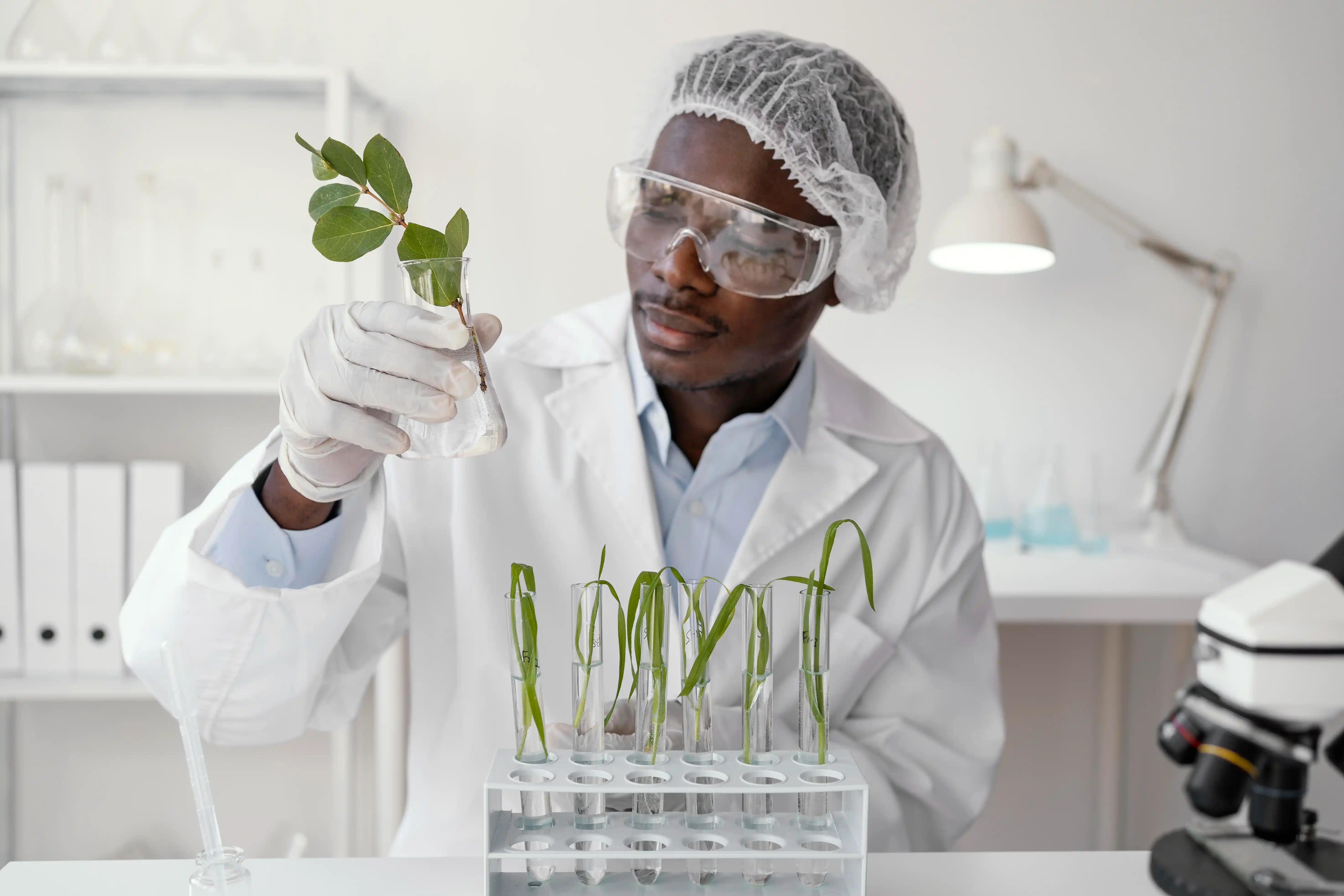
Biological Science
Overview
Job Growth
N/A
Duration
N/A
Avg. Salary
N/A
Career Paths
N/A
Program Description
Biological Science studies living systems, from cells to ecosystems, using observation, experiments and data analysis. In this program you will learn core subjects such as biology, chemistry, physics and mathematics, alongside laboratory techniques, research methods and environmental science. Practical classes and fieldwork develop skills in microscopy, dissection, sampling and accurate record keeping. Graduates can pursue careers as research scientists, laboratory technicians, environmental scientists, science teachers or quality control analysts in Ghana and beyond. The program builds critical thinking, problem solving and scientific communication, preparing SHS students for university programs, technical colleges, internships and entry-level jobs in laboratories, industry and conservation. Join to explore nature, solve real problems and contribute to health and the environment.
Aims & Objectives
Develop practical laboratory skills in microscopy, dissection, sampling and safe reagent handling, demonstrated by routine practical assessments.
Master data collection and statistical analysis using spreadsheets and basic tests, measured by completed experimental reports.
Understand research methodology and experimental design, shown by designing and carrying out supervised investigations.
Create clear scientific reports, posters and presentations with proper documentation and referencing for assessed projects.
Apply biological concepts to address local health, agricultural or environmental problems through fieldwork and community projects.
Why Choose This Program?
Hands-on laboratory experience
Frequent practical classes and fieldwork build real lab skills you can use immediately in jobs and higher study.
Strong career prospects
Leads to in-demand roles such as laboratory technician, environmental scientist, research assistant and teacher in Ghana.
Pathway to higher education
Prepares students for university degrees, technician diplomas and professional certificates in science and health fields.
Real-world impact
Gives skills to work on health, food security and environmental challenges that matter to local communities.
Industry connections and internships
Opportunities to link with hospitals, research institutes, environmental agencies and industry for attachments and mentorship.
Skills & Tools
Skills You'll Develop
Use of microscopes, pipettes, staining, aseptic technique and PPE, ensuring safe handling of chemicals and biological samples.
Recording observations, using Excel or R for basic statistics, graphs and interpretation of experimental results.
Maintaining accurate lab notebooks, preparing formal reports, posters and citations using accepted scientific formats.
Designing experiments, sampling strategies, control groups and hypothesis testing for reliable, reproducible results.
Basic calibration and upkeep of microscopes, spectrophotometers, centrifuges and pipettes to ensure valid measurements.
Tools & Resources
Microsoft Excel
R or RStudio
ImageJ
Google Docs
Reference managers (e.g., Mendeley)
Challenges & Tips
Challenges
Limited laboratory time and crowded practical sessions.
Complex theory and heavy terminology.
Tips & Advice
Use extra practice sessions, form study groups and practice procedures during supervised times to build confidence.
Break topics into smaller parts, use visuals, and revise regularly with glossaries and practical examples.
Video Guide
Frequently Asked Questions
Ready to Apply?
Find programs that match your grades and interests - even if you haven't written WASSCE yet
Loading.. Please wait.

Talk to a Professional
Join a mentorship session with real professionals working in your field of interest.
 Real industry professionals
 Small groups (10-15 students)
 Starting at GH₵ 15 per session