Bachelor of Surgery
Overview
Job Growth
N/A
Duration
N/A
Avg. Salary
N/A
Career Paths
N/A
Program Description
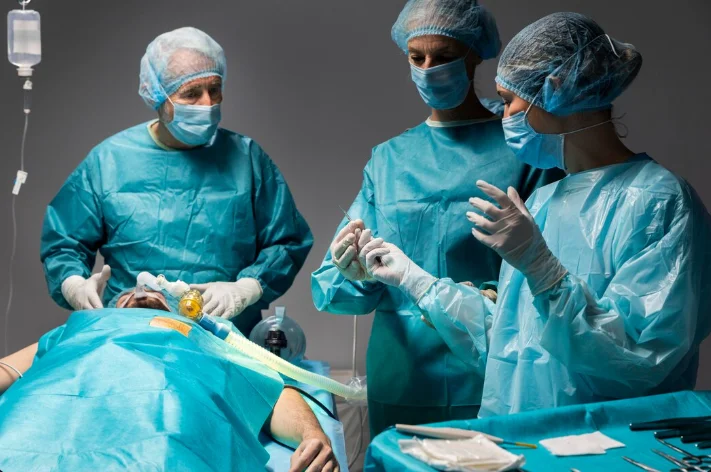
The Bachelor of Surgery is a professional medical degree that trains you to become a doctor with strong surgical and clinical skills. Over several years you study human anatomy, physiology, pathology, pharmacology, clinical medicine and basic surgical techniques, with classroom learning and hands-on clinical rotations in teaching hospitals. The program prepares graduates for housemanship, further specialist training in surgery or other fields, and roles in clinical care, public health, research and medical education. If you enjoy science, helping people and solving medical problems, this program opens a respected and in-demand career path in Ghana and beyond.
Aims & Objectives
Develop accurate patient assessment skills, demonstrated by performing full history taking and physical examinations under supervision
Master basic surgical techniques, including sterile technique, wound suturing and knot tying, to a competency standard in skills labs
Understand human anatomy, physiology and pathology, shown by passing written and practical examinations
Apply evidence based medicine by interpreting diagnostic tests and choosing appropriate management plans
Demonstrate professional ethics and effective clinical communication during patient interactions and team rounds
Why Choose This Program?
Clear professional pathway
Graduates progress to housemanship and medical registration, then can specialise in surgery, internal medicine or other fields, offering strong career progression.
Hands-on clinical training
Extensive clinical rotations in teaching hospitals and skills labs give real patient contact and practical surgical experience.
High demand and job security
Qualified doctors are in steady demand across Ghana in hospitals, clinics, public health and private practice.
Opportunities for community impact
You can directly improve patient outcomes, lead public health initiatives and contribute to health system strengthening.
Skills & Tools
Skills You'll Develop
Take medical histories, perform systematic physical examinations, measure vital signs and formulate differential diagnoses.
Perform wound care, suturing, minor procedures and maintain infection control using sterile technique and appropriate instrumentation.
Interpret common lab tests and imaging reports, and operate basic tools such as stethoscope, sphygmomanometer and ultrasound when trained.
Write clear clinical notes, discharge summaries and use electronic or paper patient records accurately for continuity of care.
Tools & Resources
Electronic health record systems (EHR)
DICOM medical image viewers
Statistical tools (SPSS or R)
Challenges & Tips
Challenges
Heavy course load and extensive memorisation
High-stakes practical and clinical assessments
Tips & Advice
Use active learning, spaced repetition and group study to break content into manageable parts.
Practice in skills labs, seek regular feedback and do supervised bedside rounds to build competence.
Video Guide
Frequently Asked Questions
Ready to Apply?
Find programs that match your grades and interests - even if you haven't written WASSCE yet
Loading.. Please wait.

Talk to a Professional
Join a mentorship session with real professionals working in your field of interest.
 Real industry professionals
 Small groups (10-15 students)
 Starting at GH₵ 15 per session