Bachelor of Sports and Exercise Medical Sciences
Overview
Job Growth
N/A
Duration
N/A
Avg. Salary
N/A
Career Paths
N/A
Program Description
The Bachelor of Sports and Exercise Medical Sciences trains students to use medical science and exercise principles to prevent injury, improve performance, and support patient recovery. You will study anatomy, physiology, biomechanics, sports nutrition, clinical assessment, rehabilitation techniques, exercise testing, public health, and research methods. Practical classes and clinical placements teach patient care, medical procedures, and use of diagnostic equipment. Graduates can pursue roles in physiotherapy pathways, medical laboratory support, public health, healthcare administration, sports clubs, and rehabilitation clinics. This program is ideal if you enjoy science, active learning, and helping others to recover and stay healthy. With Ghanaian health services and private sports organisations hiring skilled graduates, this degree opens many practical career routes and chances for further professional training.
Aims & Objectives
Develop clinical assessment skills to evaluate musculoskeletal and cardiovascular function using standard tests and measurements.
Master exercise testing and prescription methods to design safe rehabilitation and performance programs for individuals and groups.
Understand anatomy, physiology, and biomechanics to explain injury mechanisms and guide treatment plans.
Create accurate medical records and reports that meet professional documentation and infection control standards.
Why Choose This Program?
Hands-on clinical training
Strong emphasis on laboratory work and supervised clinical placements so you build real patient care and rehabilitation experience.
High local demand
Ghanaian hospitals, sports clubs, schools, and community health programs need graduates with skills in prevention, rehabilitation, and health promotion.
Interdisciplinary career paths
Combines medical science, exercise therapy, and public health, opening routes to physiotherapy, lab support, healthcare administration, and public health roles.
Industry connections and internships
Programs often partner with hospitals, clinics, sports academies, and public health agencies for practical placements and employer networking.
Skills & Tools
Skills You'll Develop
Clinical examination techniques, vital sign monitoring, musculoskeletal screening, and safe patient handling to support diagnosis and care planning.
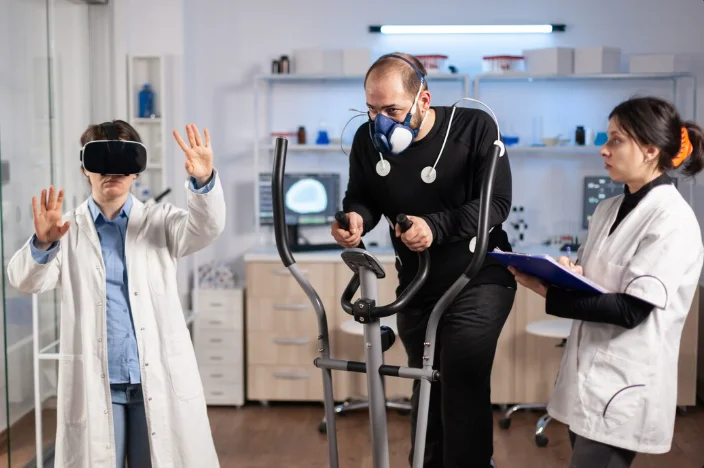
Use of treadmill and cycle ergometer testing, submaximal/field tests, and principles for designing tailored rehabilitation and performance programs.
Operation and basic interpretation of heart rate monitors, portable ECGs, dynamometers, and rehabilitation electrotherapy devices.
Accurate medical documentation, use of spreadsheets and basic statistical software to record, analyse, and report clinical outcomes.
Tools & Resources
Microsoft Excel
SPSS or similar basic statistical software
Electronic health record systems
Challenges & Tips
Challenges
Heavy science content, especially anatomy and physiology
Balancing coursework and clinical practice
Tips & Advice
Use regular revision, flashcards, group study, and make use of lab sessions to link theory to practice.
Create a weekly schedule, prioritise hands-on practice, and ask supervisors for focused skill checklists.
Video Guide
Frequently Asked Questions
Ready to Apply?
Find programs that match your grades and interests - even if you haven't written WASSCE yet
Loading.. Please wait.

Talk to a Professional
Join a mentorship session with real professionals working in your field of interest.
 Real industry professionals
 Small groups (10-15 students)
 Starting at GH₵ 15 per session