Bachelor of Medicine and Bachelor of Surgery
Overview
Job Growth
N/A
Duration
N/A
Avg. Salary
N/A
Career Paths
N/A
Program Description
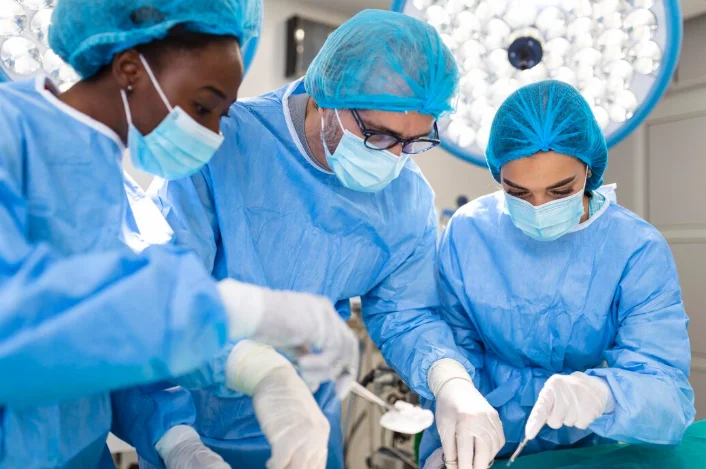
The Bachelor of Medicine and Bachelor of Surgery (MBChB) trains you to become a medical doctor who diagnoses, treats, and prevents disease. You will study anatomy, physiology, biochemistry, pharmacology, pathology, community health, and clinical medicine, with supervised clinical rotations in hospitals. The program builds strong clinical skills, patient assessment techniques, and knowledge of healthcare systems. Graduates work as medical officers, clinicians in hospitals and clinics, public health officers, or continue to specialise in surgery, internal medicine, paediatrics, obstetrics and gynaecology, or other fields. This course offers hands-on learning, patient contact, and clear pathways to meaningful, respected careers in Ghana and beyond, serving communities and improving health outcomes.
Aims & Objectives
Develop accurate patient history taking and physical examination skills by the end of clinical rotations.
Master basic clinical procedures and emergency responses under supervision, such as suturing, injections, and CPR.
Understand and apply core medical sciences, including anatomy, physiology, pharmacology, and pathology, to clinical decision making.
Apply infection control, medical documentation, and ethical standards in real clinical settings.
Why Choose This Program?
High demand and job stability
Medical doctors are in strong demand across Ghana in hospitals, clinics, NGOs, and public health, offering clear employment pathways after training.
Hands-on clinical training
Extensive supervised rotations in teaching hospitals give you real patient experience and practical skills from early years.
Pathways to specialisation and impact
After graduation you can specialise, work in public health, or pursue research, enabling career growth and community impact.
Professional recognition and mobility
An MBChB is recognised nationally and internationally, opening opportunities for further training and work both in Ghana and abroad.
Skills & Tools
Skills You'll Develop
Systematic history taking, physical exams, and formulation of differential diagnoses to guide care.
Skills such as suturing, venipuncture, catheterisation, airway management, and CPR, practised in simulation and clinics.
Reading common lab results, X-rays, ECGs, and using findings to inform treatment plans.
Applying standard precautions, aseptic techniques, and protocols to prevent healthcare associated infections.
Tools & Resources
Electronic medical record (EMR) systems
Anatomy visualization apps (for example Complete Anatomy or similar)
Clinical decision support and drug reference apps
Challenges & Tips
Challenges
Large volume of complex material to learn
High-stakes clinical assessments and OSCEs
Tips & Advice
Use active study methods, make clear notes, schedule regular revision, and form study groups to test understanding.
Practice clinical stations in simulation labs, get feedback from instructors, and rehearse communication skills.
Video Guide
Frequently Asked Questions
Ready to Apply?
Find programs that match your grades and interests - even if you haven't written WASSCE yet
Loading.. Please wait.

Talk to a Professional
Join a mentorship session with real professionals working in your field of interest.
 Real industry professionals
 Small groups (10-15 students)
 Starting at GH₵ 15 per session