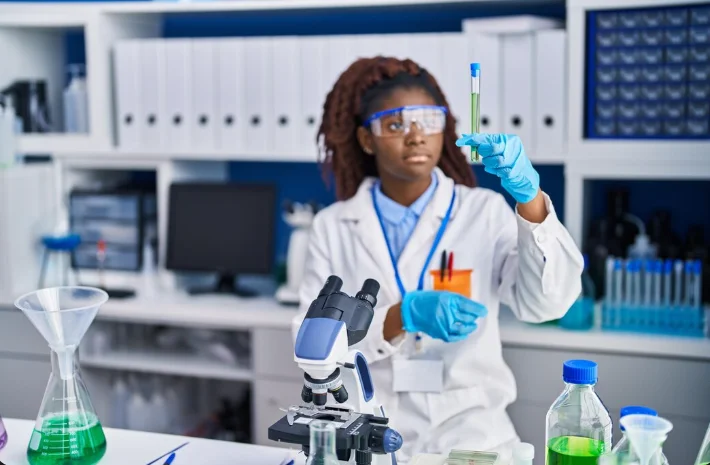
Bachelor of Medical Biochemistry and Molecular Biology
Overview
Job Growth
N/A
Duration
N/A
Avg. Salary
N/A
Career Paths
N/A
Program Description
The Bachelor of Medical Biochemistry and Molecular Biology trains students to understand the chemical and molecular workings of the human body and disease. You will study biochemistry, molecular biology, genetics, microbiology, immunology, clinical laboratory techniques, and research methods, with regular lab practicals. The program prepares you for roles in diagnostic laboratories, hospitals, public health units, pharmaceutical firms, and research centres. Graduates may work as medical laboratory technicians, research assistants, public health officers, or progress to further training in clinical sciences and healthcare administration. This degree gives practical lab skills and a strong scientific foundation for careers that support patient care and health services. Study hard, stay curious, and you can build a meaningful career in healthcare and diagnostics.
Aims & Objectives
Develop practical competence in core laboratory techniques, including PCR, gel electrophoresis, spectrophotometry, and basic clinical assays, with measurable proficiency in practical exams.
Understand biochemical and molecular mechanisms of health and disease, demonstrated by passing written assessments and case studies.
Master laboratory safety, infection control, and quality assurance procedures, evidenced by adherence to protocol during practical sessions.
Apply basic data analysis and interpretation skills using statistical tools and bioinformatics resources, shown by accurately reporting and presenting laboratory results.
Why Choose This Program?
Strong demand in healthcare and diagnostics
Hospitals, diagnostic labs, and public health services in Ghana need graduates who can perform and interpret lab tests that inform patient care and disease control.
Hands-on practical training and internships
Programs include laboratory practicals and placements with teaching hospitals and diagnostic centres, giving real-world experience and professional contacts.
Versatile career and study pathways
The degree leads to roles in laboratories, public health, pharmaceuticals, and research, and offers a pathway to postgraduate training and specialized clinical roles.
Direct impact on patient care and public health
Work from this program helps diagnose disease, monitor treatment, and support health programs, giving visible and meaningful impact on communities.
Skills & Tools
Skills You'll Develop
Perform PCR, gel electrophoresis, DNA/RNA extraction, and basic sequencing workflows to detect and study genetic material.
Use spectrophotometry, enzymatic assays, and immunoassays to measure metabolites, enzymes, and biomarkers for diagnosis and monitoring.
Prepare and examine blood films, perform cell counts, and use light microscopy for clinical and research observations.
Analyze laboratory data with Excel and statistical tools, and use basic functions of Laboratory Information Management Systems for record keeping.
Tools & Resources
Laboratory Information Management System (LIMS)
Microsoft Excel
GraphPad Prism or basic statistics software
NCBI BLAST and basic bioinformatics tools
Challenges & Tips
Challenges
Heavy theoretical and practical workload
Complex concepts in biochemistry and genetics
Tips & Advice
Create a weekly study and lab schedule, join study groups, and attend all practical sessions to build steady progress.
Use visual aids, videos, and textbooks, and ask lecturers for clarification early to avoid falling behind.
Video Guide
Frequently Asked Questions
Ready to Apply?
Find programs that match your grades and interests - even if you haven't written WASSCE yet
Loading.. Please wait.

Talk to a Professional
Join a mentorship session with real professionals working in your field of interest.
 Real industry professionals
 Small groups (10-15 students)
 Starting at GH₵ 15 per session