Automotive Engineering
Overview
Job Growth
N/A
Duration
N/A
Avg. Salary
N/A
Career Paths
N/A
Program Description
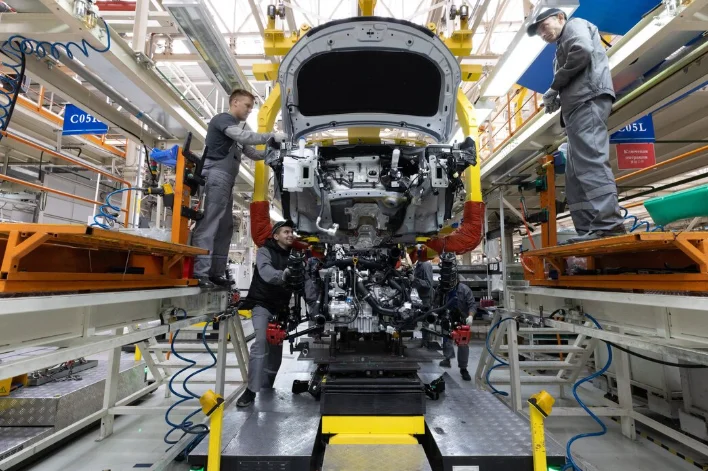
Automotive Engineering teaches you how vehicles are designed, built, maintained, and improved. You will study vehicle systems such as engines, transmissions, brakes, electrical and electronic controls, and basic vehicle design. Main subjects include automotive mechanics, electrical systems, workshop practice, technical drawing and computer-aided design, and basic programming for vehicle electronics. The program prepares you for careers as an automotive technician, maintenance engineer, vehicle design trainee, or for further study in mechanical, electrical, or software engineering. It builds practical skills, hands-on experience, and problem-solving ability, giving you a strong start in a growing industry that includes traditional vehicles and new electric and automated systems. Aim high and learn by doing.
Aims & Objectives
Develop practical skills in diagnosing and repairing vehicle mechanical and electrical systems, demonstrated through workshop assessments.
Master basic computer-aided design, producing readable vehicle component drawings and simple 3D models using CAD software.
Understand fundamentals of vehicle electronics and embedded control, shown by building or programming a basic controller or sensor circuit.
Create clear technical documentation and maintenance plans, evaluated by written reports and service sheets.
Why Choose This Program?
Strong job demand
Vehicle repair, maintenance and fleet services are in steady demand in Ghana, offering quick entry-level employment and growth into specialist roles.
Hands-on learning
Workshops and practical projects let you learn by doing, so you gain real skills employers value from day one.
Pathway to diverse careers
Skills transfer to mechanical, electrical and software engineering roles, as well as opportunities in electric vehicle and automation sectors.
Industry links and internships
Local garages, transport companies and manufacturers often take interns, giving practical exposure and networking opportunities.
Skills & Tools
Skills You'll Develop
Use software such as SolidWorks or AutoCAD to create vehicle part drawings and simple 3D models for prototypes and repairs.
Operate OBD-II scanners, multimeters and workshop tools to find and fix mechanical and electrical faults.
Understand ECUs, sensors and actuators and write simple code or configure microcontrollers for control tasks.
Apply algebra, trigonometry and basic physics to analyze forces, motion and system behavior, using tools like MATLAB when available.
Tools & Resources
SolidWorks or AutoCAD
Automotive diagnostic software (OBD apps)
MATLAB or free alternatives for basic modeling
Arduino IDE or equivalent for microcontroller practice
Challenges & Tips
Challenges
Difficulty with maths and physics concepts
Tips & Advice
Practice regularly with past questions, join study groups, and use online tutorials to strengthen fundamentals.
Video Guide
Frequently Asked Questions
Ready to Apply?
Find programs that match your grades and interests - even if you haven't written WASSCE yet
Loading.. Please wait.

Talk to a Professional
Join a mentorship session with real professionals working in your field of interest.
 Real industry professionals
 Small groups (10-15 students)
 Starting at GH₵ 15 per session