Aquaculture and Fisheries Science
Overview
Job Growth
N/A
Duration
N/A
Avg. Salary
N/A
Career Paths
N/A
Program Description
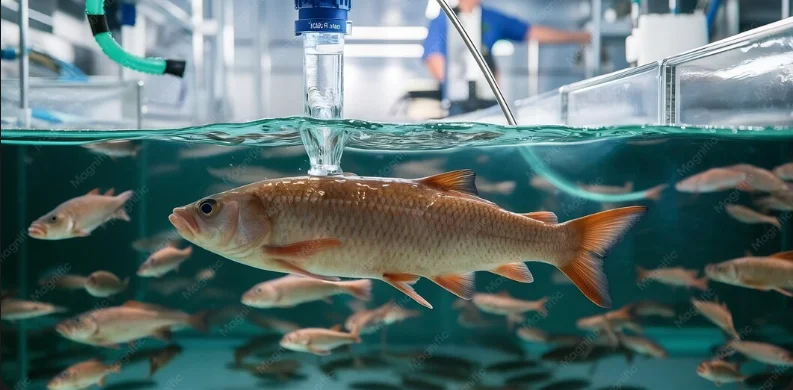
Aquaculture and Fisheries Science teaches students how to raise fish and manage aquatic ecosystems in sustainable, productive ways. You will study fish biology, hatchery and pond management, water quality, feed formulation, disease control, fisheries management, and related subjects in Biology, Chemistry, Mathematics, and Agricultural Science. Practical lessons include pond construction, water testing, hatchery practice, and farm record keeping. Graduates can work as farm managers, aquaculture technicians, fish health officers, conservation officers, or continue to study agronomy and environmental science. This program suits students who enjoy science and the outdoors, and who want practical skills to support food security, start small aquaculture businesses, or join government and private sector projects.
Aims & Objectives
Develop hands-on skills in pond and hatchery operations, including stocking, feeding, and harvesting
Master water quality testing and monitoring techniques to ensure healthy fish culture environments
Understand fish biology, nutrition, and disease management to reduce mortality and improve yields
Create accurate farm records and perform basic data analysis to evaluate production performance
Apply sustainable and conservation practices to manage fisheries and protect aquatic ecosystems
Why Choose This Program?
Strong job demand
Growing need for fish as protein in Ghana means skilled aquaculture workers and managers are in demand.
Practical, hands-on learning
Lab and pond-based training prepares you to work from day one on farms, hatcheries, and research sites.
Diverse career pathways
Leads to roles in farm management, extension services, conservation, fisheries regulation, and agribusiness.
Opportunities for entrepreneurship
Skills support starting small-scale fish farms, feed businesses, or service provision in rural areas.
Industry and internship links
Programs often connect students with Fisheries Commission, research centres, and private farms for placements.
Skills & Tools
Skills You'll Develop
Use pH meters, dissolved oxygen meters, and spectrophotometry to monitor conditions and adjust management.
Calculate feed rations and use local ingredients to formulate balanced diets that improve growth and lower costs.
Design and operate earthen ponds, cages, and RAS, including aeration, filtration, and stocking density control.
Recognise common parasites, bacterial and fungal diseases, perform microscopy and basic treatment protocols.
Record production records, analyse growth and feed conversion using Excel or basic R statistics for decision making.
Tools & Resources
Microsoft Excel
R or SPSS for basic statistics
QGIS for mapping and site selection
Farm management or aquaculture software (farm logs, inventory)
Challenges & Tips
Challenges
Struggling with science and maths concepts
Limited practical lab time
Tips & Advice
Form study groups, ask teachers for extra help, and use online tutorials to strengthen fundamentals.
Volunteer at nearby farms, practise simple tests at home, and use school projects to gain hands-on experience.
Video Guide
Frequently Asked Questions
Ready to Apply?
Find programs that match your grades and interests - even if you haven't written WASSCE yet
Loading.. Please wait.

Talk to a Professional
Join a mentorship session with real professionals working in your field of interest.
 Real industry professionals
 Small groups (10-15 students)
 Starting at GH₵ 15 per session