Applied Technology (Electrical and Electronics)
Overview
Job Growth
N/A
Duration
N/A
Avg. Salary
N/A
Career Paths
N/A
Program Description
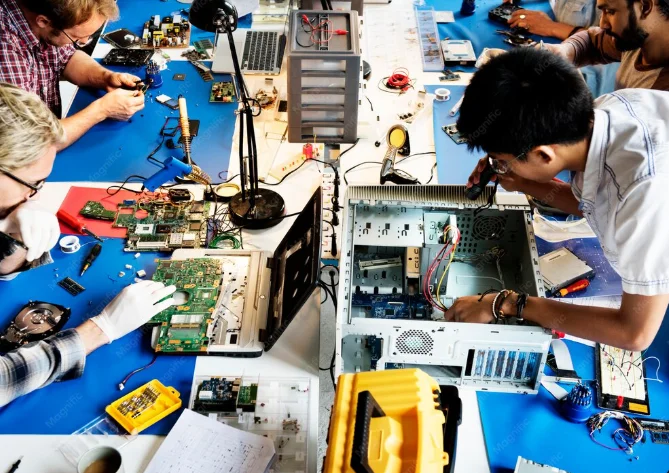
Applied Technology in Electrical and Electronics teaches you how to design, build, test, and maintain electrical systems and electronic devices used in homes, factories, and infrastructure. You will study basic and advanced electricity, electronic circuits, digital systems, microcontrollers and programming, instrumentation, and technical drawing. The program blends classroom theory with hands-on lab work and project-based learning. Graduates can move into roles such as electrical technician, electrical engineer assistant, IT support specialist, automation technician, or continue to higher study in engineering fields. This course prepares you to solve practical problems, work with technology and systems, and start a technical career or further education with confidence.
Aims & Objectives
Develop practical skills in constructing and testing electrical and electronic circuits, demonstrated by building and documenting at least three functioning prototypes.
Master basic programming for microcontrollers and embedded systems, demonstrated by writing and deploying code on Arduino or Raspberry Pi projects.
Understand mathematical and analytical methods for circuit analysis, measured by solving real-world circuit problems and simulations.
Create technical drawings and use CAD tools for simple electrical layouts, shown by producing clear schematics and wiring diagrams.
Why Choose This Program?
Hands-on, practical learning
Lab work and projects give real skills you can use on the job, not just theory.
Strong job prospects
Skills are in demand in power, manufacturing, telecommunications, and automation across Ghana.
Pathway to higher studies and engineering careers
Completing this program prepares you for further study in electrical, electronics or related engineering degrees.
Industry connections and internships
Opportunities to work with local firms, utility companies and vocational workshops for practical experience.
Skills & Tools
Skills You'll Develop
Design, assemble and test analog and digital circuits using breadboards, soldering, and measurement tools.
Program Arduino or Raspberry Pi for control tasks, sensors, and simple automation using C/C++ or Python.
Use CAD tools to create wiring diagrams and PCB layouts for clear technical documentation and fabrication.
Use multimeters, oscilloscopes and sensors to diagnose faults and verify system performance.
Tools & Resources
CAD and schematic tools (AutoCAD, EAGLE or KiCad)
Simulation tools (LTSpice, Proteus)
Programming IDEs (Arduino IDE, Thonny for Python)
Challenges & Tips
Challenges
Difficult mathematics and theoretical concepts
Applying theory to practical work
Tips & Advice
Practice regularly, use step-by-step tutorials, and join study groups to strengthen understanding.
Spend extra time in the lab, work on small projects, and ask teachers for guided practical assignments.
Video Guide
Frequently Asked Questions
Ready to Apply?
Find programs that match your grades and interests - even if you haven't written WASSCE yet
Loading.. Please wait.

Talk to a Professional
Join a mentorship session with real professionals working in your field of interest.
 Real industry professionals
 Small groups (10-15 students)
 Starting at GH₵ 15 per session