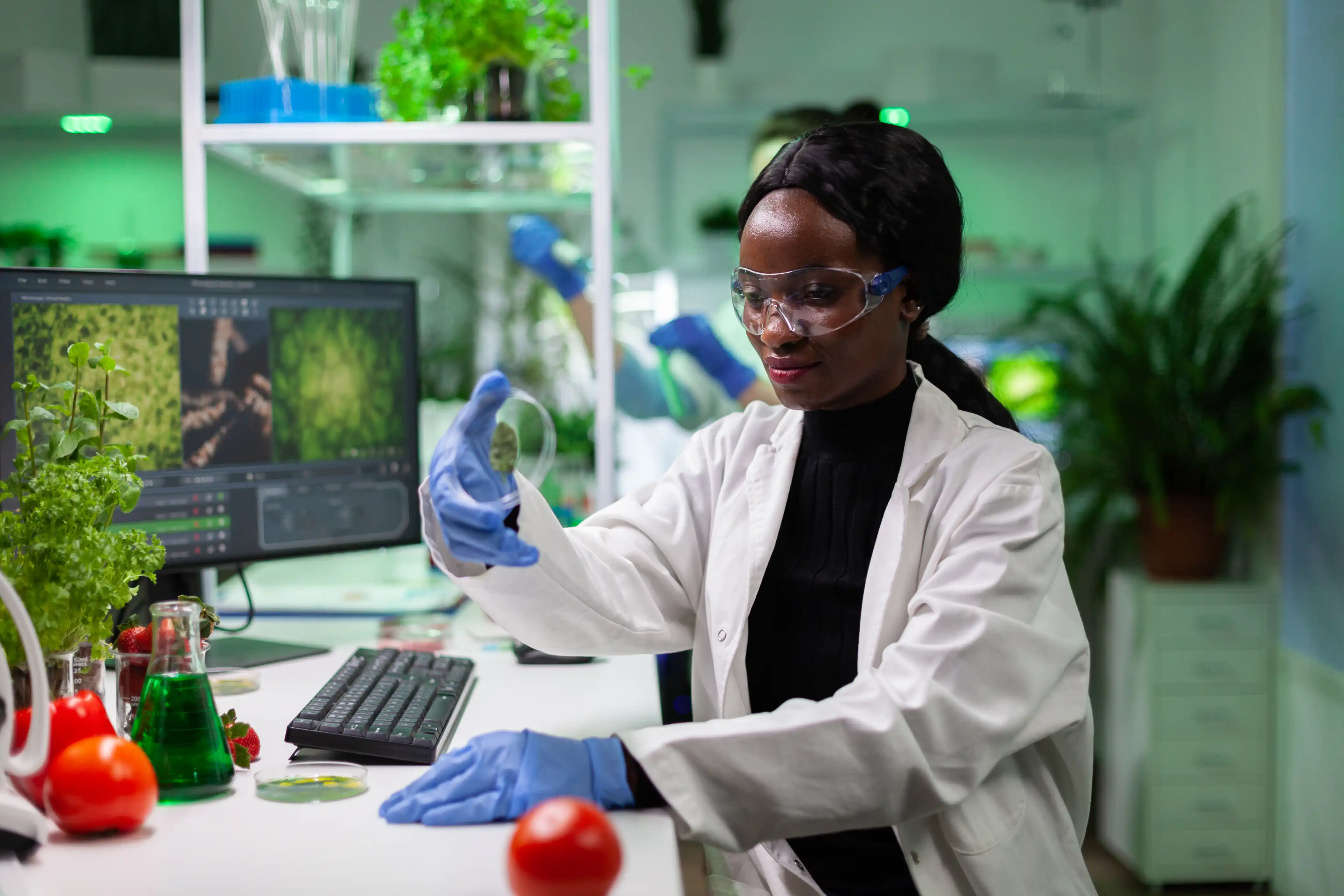
Agricultural Biotechnology
Overview
Job Growth
N/A
Duration
N/A
Avg. Salary
N/A
Career Paths
N/A
Program Description
Agricultural Biotechnology combines biology and farming to improve crops, soil health, and environmental sustainability. You will study plant biology, genetics, soil science, pest management, laboratory methods, and sustainable farming techniques, with practical lessons in crop management and data analysis. The program trains you to test soils, evaluate crop performance, and recommend environmentally friendly practices. Career paths include agronomist, soil scientist, farm manager, conservation officer, and environmental technician, with opportunities in research, extension services, agribusiness, and NGOs. This program is for students who enjoy hands-on science and want to help Ghana build resilient, productive farms while protecting natural resources.
Aims & Objectives
Develop practical lab skills to perform basic soil and plant tests accurately.
Master soil and crop management techniques for improved yields and sustainability.
Understand genetic and biological principles that influence crop traits and pest resistance.
Create farm management plans that integrate conservation and sustainable practices.
Analyze environmental impacts of farming using simple data collection and reporting methods.
Why Choose This Program?
Strong job prospects
High demand for agronomy, soil science, and conservation roles in Ghana, from farms to government and NGOs.
Hands-on learning
Practical farm work, lab exercises, and field trips build real skills you can use immediately.
Impact on food security
Work that improves crop yields and sustainability, helping communities and the national food supply.
Technology and innovation
Learn modern tools like GIS, soil sensors, and basic molecular methods that are transforming agriculture.
Pathways to further study
Clear progression to university degrees, short courses, internships, and research opportunities.
Skills & Tools
Skills You'll Develop
Use soil test kits, pH meters, and basic lab protocols to assess fertility and recommend treatments.
Collect field data, evaluate erosion and runoff, and prepare simple reports on farming impacts.
Design crop rotations, intercropping, and agroforestry plans that conserve soil and water resources.
Record field measurements, enter data in spreadsheets, and interpret results using Excel or basic statistics.
Operate GPS devices, mobile farm apps, and learn basic remote sensing or drone data interpretation.
Tools & Resources
Microsoft Excel
QGIS
Farm management apps (e.g., iCow)
R or basic statistical tools
online soil database tools
Challenges & Tips
Challenges
Limited lab experience
Difficulty with maths or data analysis
Tips & Advice
Join extra lab sessions, practical clubs, or ask teachers for hands-on time during vacations.
Practice basic statistics and spreadsheets with online tutorials and school exercises.
Video Guide
Frequently Asked Questions
Ready to Apply?
Find programs that match your grades and interests - even if you haven't written WASSCE yet
Loading.. Please wait.

Talk to a Professional
Join a mentorship session with real professionals working in your field of interest.
 Real industry professionals
 Small groups (10-15 students)
 Starting at GH₵ 15 per session